Portal Ownership Transfer Mechanics
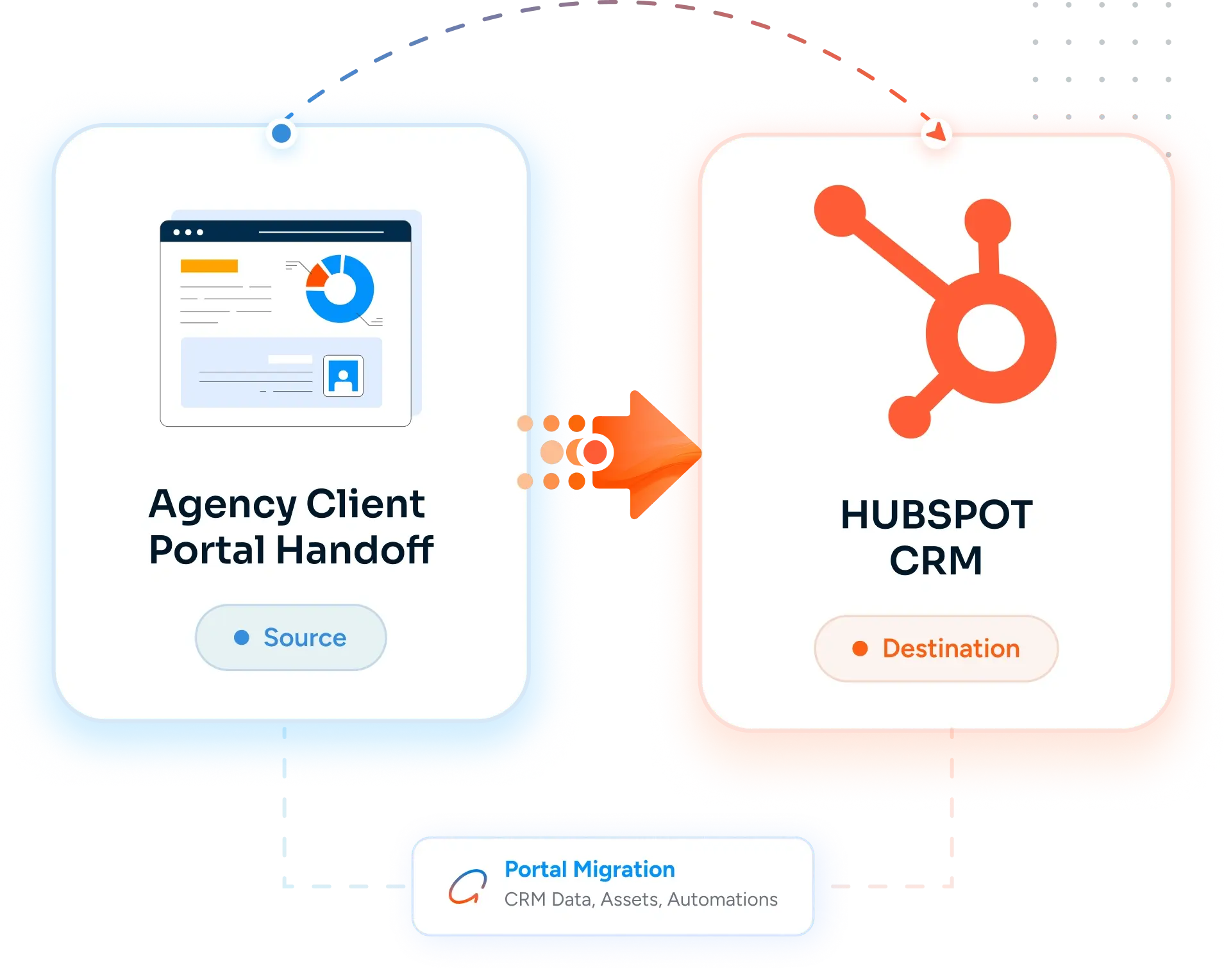
HubSpot's portal ownership transfer is a defined process: the current Super Admin transfers ownership, the new owner accepts, billing details update, and the agency's access can be revoked. But the process has sequencing requirements - billing transfer before access revocation, Solutions Partner relationship handling via the Partner Portal, and downstream license implications. Skip a step and the client either loses access mid-handoff or the agency keeps Super Admin rights longer than they should.
GDPR and PII Implications of Agency Access
Until the handoff, the agency has Super Admin access to every contact, every email engagement, every deal, every conversation. Under GDPR, that access is a data processing relationship that needs documented termination - not just a quiet user removal. The Data Processing Agreement (DPA) needs to be closed out, the access revocation needs to be auditable in the audit log, and the client needs documented confirmation that no agency staff retain credentials or data exports.
Access Revocation Timing and Order
Revoke agency access too early and the client cannot reach the agency for handoff support. Revoke too late and the agency retains operational control of a portal that legally belongs to the client. The right pattern is staged: agency Super Admin revoked at handoff, agency support user retained for 30 days at limited access, then full revocation. Without an explicit timeline, the handoff drags out for months and access logs become impossible to audit.
Custom Code, Private Apps, and Integrations the Client Did Not Build
The agency built Private Apps, custom CRM cards, serverless functions, custom reporting dashboards, and Operations Hub custom-coded workflow actions. The client never touched any of them. At handoff, ownership of every Private App needs to transfer, every integration needs new client-owned API credentials, and the source code (where applicable) needs to be transferred with documentation. Without this step, the client inherits a black box that breaks the first time a sync token expires.
The Documentation Gap and Training Cliff
The agency knows why the lead routing workflow has that branching logic, why the lifecycle stage automation pauses contacts in a specific status, and why the Custom Object schema has a field nobody has touched in two years. None of that is documented. At handoff, the client team gets the keys to a portal they did not build and need to operate. Without structured documentation and training, the first 90 days of independent operation are spent reverse-engineering decisions the agency made years ago.
The Real Cost: A Handoff That Leaves the Client Stranded
Most agency handoffs fail not at the technical layer but at the operational and documentation layer. The portal works the day the agency walks away. Three weeks later, an integration token expires and nobody at the client knows which Private App owns it. Three months later, a workflow misfires and nobody can explain what it was supposed to do. The cost is not the migration project - it is the client's sustained operational pain after the handoff, and the reputational damage to the agency that delivered an undocumented black box.




-2.png)
-2.png)

.png)

.webp)
.png)




.png)




-1.webp)
-1.webp)

.webp)

-1-1.webp)


-2.webp)
-1-1.webp)
-2-1.png)
-1-1.webp)
-1-1.webp)
-1-1.png)







![image 76 [Vectorized]](https://hubxpert.com/hubfs/image%2076%20%5BVectorized%5D.png)


-2.svg)


-2.svg)
-2.svg)
-1.svg)

-1.png)
-1.png)
-1.png)
-1.png)
-1.png)





-2.svg)

.svg)

.svg)
-2.svg)
-Jun-03-2026-07-43-50-4281-AM.svg)
-2.svg)
-Jun-03-2026-07-43-50-4673-AM.svg)
-1.svg)
-1.svg)







.svg)

.svg)

.svg)
-1.svg)
-1.svg)
.svg)










































%20-%20HubXpert%20Migration%20Logo.png)