-2.png)
-2.png)
.png)
.webp)
.png)
.png)


-1.webp)
-1.webp)
.webp)
-1-1.webp)
-2.webp)
-1-1.webp)
-2-1.png)
-1-1.webp)
-1-1.webp)
-1-1.png)



The U.S. cosmetic surgery market hit $21.63 billion in 2025 and is forecast to climb to $41.29 billion by 2034, growing at a 7.4% CAGR (Precedence Research, 2025). That's a massive tailwind for aesthetic clinics, but most of the practices I've audited over the last five years aren't capturing a meaningful share of it.
The reason is simple: they're still running their marketing on Instagram DMs, a front-desk spreadsheet, and a paid-ads agency that never talks to their CRM. Every lead leaks. Every consultation is a manual chase. And the only patients who book are the ones who happened to call on a quiet Tuesday.
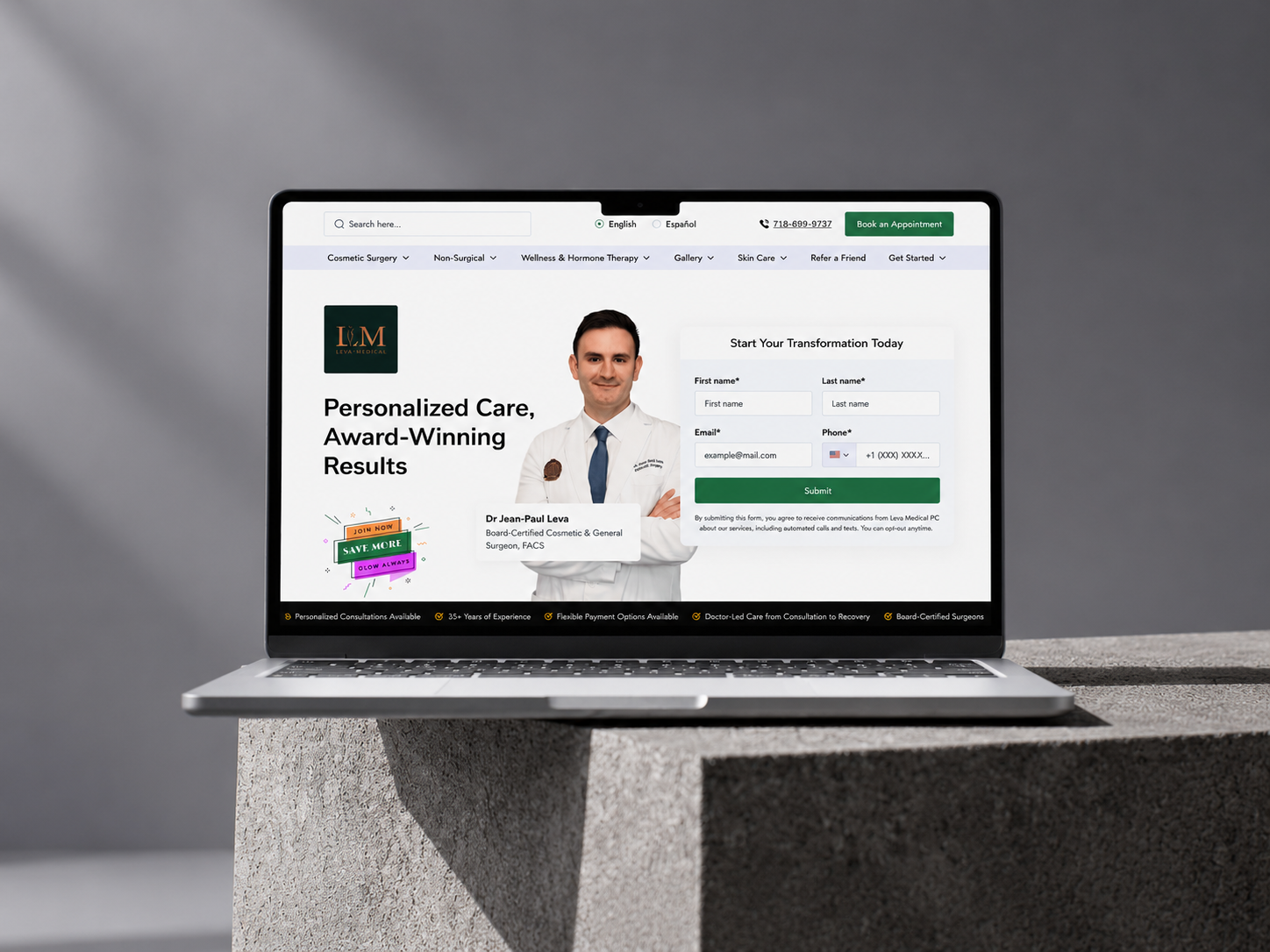
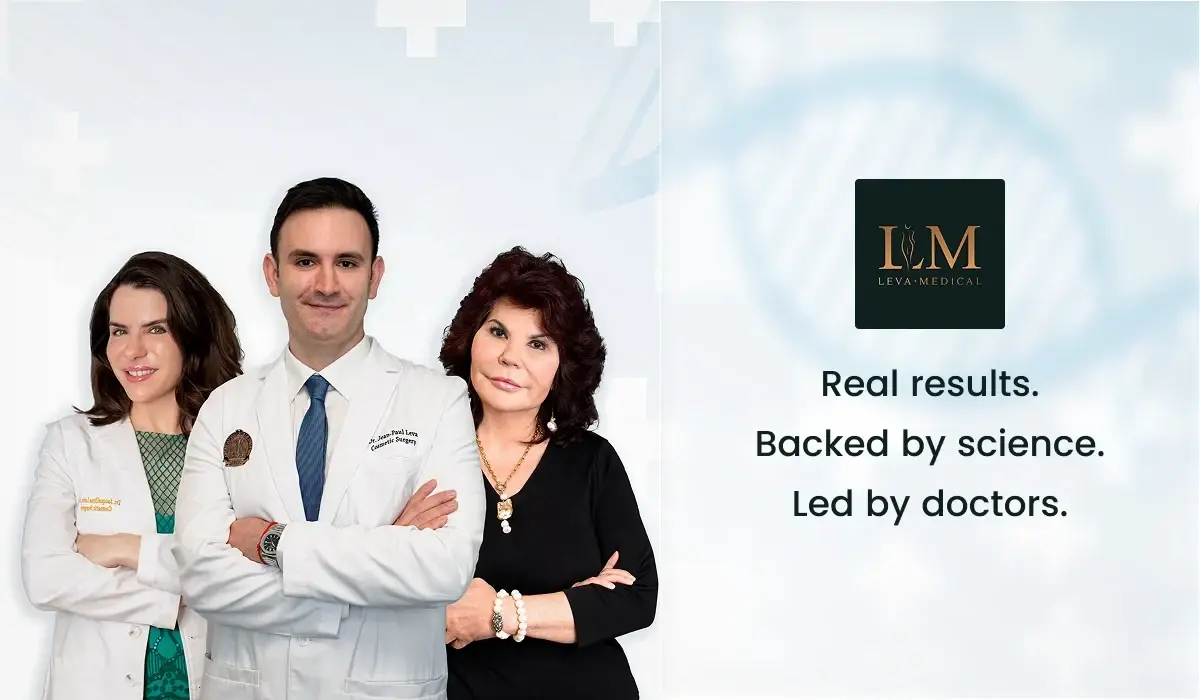
In this blog, I'll share the marketing automation ideas I've personally implemented for one of our healthcare clients, Leva Medical, where we've seen tremendous results. Today, I'll walk you through what's working, and how you can implement any of these ideas yourself.
Marketing automation for aesthetic clinics is the use of CRM-driven workflows (lead routing, no-show reminders, reorder cycles, and post-procedure follow-ups) to convert and retain patients without manual effort. Built right on HubSpot, it lifts consultation booking rates by two to three times and can recover $200,000+ in annual revenue from existing patients alone.
Why marketing automation finally matters for aesthetic clinics
Where HubSpot Fits vs Point-Solution Alternatives
Aesthetic clinics evaluating marketing automation usually end up comparing a few categories of tool. Here is honestly where each one fits.
HubSpot
A full CRM with marketing automation built on top of it. The advantage for aesthetic clinics specifically: patient records, booking data, and marketing activity live in one system, which is what makes the reorder cycles, attribution, and smart-content plays in this article possible. The tradeoff is setup effort, it takes real implementation work to connect booking software and EHR data before the automation is worth much.
Klaviyo and Mailchimp
Strong, well-known email and SMS automation tools, but they are not CRMs. Without a connected patient database, they can send good campaigns but can't drive the CRM-dependent plays in this article, product-specific reorder timing, consultation-to-treatment attribution, or smart content based on patient history. A reasonable choice for a clinic that only needs campaign sending, not full patient lifecycle automation.
Podium and Weave
Healthcare and local-service focused platforms built primarily around messaging, reviews, and payments rather than full marketing automation. Often a good fit for review generation and two-way texting specifically. Weaker for the multi-step nurture and attribution workflows this article covers.
ActiveCampaign
Positioned similarly to HubSpot's marketing side, strong automation builder, generally lower cost. The gap for aesthetic clinics is the same as Klaviyo's: no native CRM layer built for patient/procedure data, so booking-software and EHR integration work has to be bridged separately rather than being native to the platform.
The short version: if the goal is patient lifecycle automation tied to actual booking and revenue data, as this article assumes throughout, a CRM-based platform is the right category, and HubSpot is the one built out in the most depth below. If the need is narrower, campaign sending or review requests only, a point solution can be simpler and cheaper.
Why marketing automation finally matters for aesthetic clinics
Aesthetic procedures have one of the longest consideration windows in healthcare. The American Society of Plastic Surgeons reports that 84% of cosmetic procedures are performed on female patients, and the 35–50 age cohort drives 48% of the market (Mordor Intelligence, 2026). These are researched, deliberate purchases — patients consume an average of four to six weeks of content before booking.
If your clinic isn't in front of them across that entire window (email, retargeting, SMS, content), you're not on the shortlist. Automation makes that presence economically viable for a one-to-fifty person clinic.
%201%20(1).svg)
Translation
You can't out-spend the chain med-spa next door, but you can out-automate them.
The 10 proven marketing automation ideas worth building first
Below are the 10 highest-ROI automation plays I'd build (in this order) for a U.S. aesthetic clinic on HubSpot.
1. Consultation-request lead capture with smart routing
Replace your 'Contact Us' form with a HubSpot multi-step form that captures procedure of interest, preferred location, and budget range. Route the lead via workflow to the right consultation coordinator based on procedure: Botox leads to your front desk, surgery leads to your patient care coordinator. Average response time drops from 18 hours to under 15 minutes.
Question order matters more than people think. Ask procedure of interest first, then timeline, then contact info. Asking for phone number on step one drops completion rates by 40%+. The mechanic is psychological: each small question creates a micro-commitment, and by the time the patient hits step three, they're already invested enough to finish.
2. Procedure-specific email nurture sequences
Build separate 5-email nurtures for surgical (rhinoplasty, breast augmentation, liposuction) versus non-surgical (Botox, fillers, lasers). Surgical buyers need trust and credentials; injectable buyers need convenience and pricing. One generic nurture serving both audiences underperforms a segmented version by 30–40%.
3. Automatic appointment reminders
U.S. healthcare loses an estimated $150 billion annually to patient no-shows (Dialog Health, 2025). Automated email and SMS reminders sent 24 hours and 2 hours before the appointment cut no-show rates by 20–30% in MGMA-published benchmarks. For an aesthetic clinic averaging 80 consults a month, that's roughly $16,000–$24,000 in recovered monthly revenue.
The reminder copy matters more than people assume. Generic 'Your appointment is tomorrow at 2pm' converts at a 92% confirmation rate. A personalized 'Your consultation with Dr. [Name] is tomorrow at 2pm at [Address]. Reply Y to confirm or call us to reschedule' converts at 96%+. That four-point delta is roughly three extra consultations per month at no added cost.
4. Post-procedure follow-up and review-request workflows
Trigger a 3-touch post-procedure sequence: a recovery check-in at day 3, a results photo request at day 14, and a Google or RealSelf review request at day 30. Review velocity is the single biggest local-SEO driver for aesthetic clinics, and almost no clinic does it systematically.
Review platforms worth prioritizing for aesthetic clinics, in order: Google Business Profile (drives local SEO most directly), RealSelf (the dominant aesthetic-specific platform, patients consult it before booking), Healthgrades (matters for surgical procedures), and Yelp (declining for healthcare; deprioritize). Ask for the Google review first; once a patient leaves one, RealSelf becomes a much easier ask.
5. Re-engagement campaigns for dormant patients
Pull every patient who hasn't booked in nine months into a segment and run a 3-email re-engagement. Filler and Botox half-life means most lapsed patients are statistically due for a top-up. Recovery rates on these campaigns regularly hit 8–12%.
6. Birthday and procedure-anniversary offers
Simple, automatic, and shockingly profitable. A birthday email with a $100 credit toward injectables, sent in the patient's birth month, typically returns 5–8x its cost. Anniversary emails (one year since first treatment) work even better.
7. Lead-magnet funnel for procedure guides
Build a 'Complete Guide to Rhinoplasty Recovery' or 'What to Know Before Your First Botox Appointment' as a gated PDF. Drive paid social to the landing page. Captured leads enter a procedure-specific nurture. Cost per qualified lead drops 40–60% versus pushing cold traffic to a consultation page.
Conversion rates by lead-magnet type tell you what to build: procedure-specific PDFs convert at 8–12%, generic 'aesthetic procedures guide' PDFs at 2–4%, price-range guides at 10–15%, and surgeon webinars at 3–6%. Specificity wins. A 'rhinoplasty recovery week-by-week' guide outperforms a general aesthetic guide by roughly 4x on the same ad spend.
8. Membership and treatment-plan billing automation
If you offer a monthly facial membership or a treatment package (e.g., 3-session laser), HubSpot can automate the membership renewal reminder, payment-failure recovery, and benefit-utilization nudge. Med-spa subscriptions are growing at 7.86% CAGR, the fastest end-user segment in aesthetics (Mordor Intelligence, 2026).
9. Smart content for repeat versus first-time patients
HubSpot's smart content shows different homepage banners, email copy, and CTAs based on whether the visitor is a known patient or a new lead. First-time visitors see 'Book your free consultation.' Existing patients see 'Your next Botox is due, rebook in one click.' Same site, two very different conversion experiences.
10. Multi-touch revenue attribution reporting
The play that proves all the above are working. Connect HubSpot to your booking software and revenue source so you can see which email, ad, or blog actually drove the $8,000 rhinoplasty. Without attribution, you're guessing where to spend next quarter's marketing budget.
Quick framing on attribution models: first-touch credits the channel that started the patient's journey. Last-touch credits the channel that closed it. Multi-touch distributes credit across every interaction. For aesthetic clinics with four-to-six week consideration windows, first-touch attribution actually matters more than last-touch: the awareness channel (usually Instagram or a procedure guide) is the real driver, even though the booking call closes through a different channel.
What Success Looks Like: A Real Benchmark
Numbers help. Here's what a properly automated U.S. aesthetic clinic typically looks like after six months on HubSpot, compared to a clinic running on Instagram DMs and a spreadsheet.
On lead capture: form-to-consultation conversion moves from 18–22% (single-step form, email-only follow-up) to 40–55% (multi-step form plus SMS and email). On the same paid ad spend, that's roughly 2.5x more consultations booked.
On consultation show-up: rates climb from 65–75% (no pre-consult nurture) to 85–92% (3-email pre-consult sequence). For a clinic booking 80 consultations per month, that's about 16 additional consultations actually walking in the door, at zero added ad cost.
On repeat revenue: average visits per active patient per year moves from 1.9 to 2.7 once reorder workflows are running. On a 600-patient base at $650 average treatment value, that's roughly $312,000 in incremental annual revenue from patients you already had.
On attribution: clinics that finally connect ad spend to procedure revenue typically reallocate 20–30% of their ad budget within the first 90 days. Money that was going to underperforming channels gets redirected to the channels that actually produce booked surgeries. No spend increase required.
These aren't theoretical numbers. They come from real implementations. See the full Leva Medical case study for the play-by-play, and HubSpot's State of Marketing for broader industry benchmarks.
The headline
Automation isn't about sending more emails. It's about converting more of the demand you already have.
How to Sequence the Rollout: Which Ideas to Build First
If you build all 10 of these at once, you'll debug for six months and never see ROI. Here's the rollout order that actually works for aesthetic clinics starting from zero on HubSpot:
Weeks 1–4: appointment reminders (idea 3) and the multi-step lead-capture form (idea 1). These two alone typically pay back the entire HubSpot license within 60 days. No-show recovery is fast, predictable revenue.
Weeks 5–10: post-procedure review workflow (idea 4) and the re-engagement sequence for dormant patients (idea 5). Both work on your existing patient base, no ad spend required.
Weeks 11–16: procedure-specific email nurtures (idea 2) and the lead magnet funnel (idea 7). These need content production, which is why they come later, but they're the foundation of your top-of-funnel pipeline.
Months 4–6: birthday and anniversary automation (idea 6), smart content (idea 9), and membership billing (idea 8). Operational polish that compounds revenue on the systems you already have running.
Month 6+: multi-touch attribution (idea 10). Build this last, because it requires every other workflow to be feeding clean data. Build it first and you'll attribute revenue to channels that don't deserve it.
Common mistakes I see in aesthetic-clinic automation
- Buying tools before fixing data. Garbage contact data in equals garbage automation out. Clean the list first.
- Sending the same email to surgical and injectable leads. Completely different buyer journeys, completely different sequences.
- Forgetting HIPAA on patient communications. Never send PHI (protected health information) through marketing emails. Use HubSpot's transactional setup or secure portal links.
Setting it and forgetting it. Automation is not 'build once.' Audit every workflow quarterly: patients change, procedures change, copy gets stale.
How HubXpert helps aesthetic clinics win
We've spent 5+ years and 150+ projects helping service businesses get real revenue out of HubSpot. For aesthetic clinics specifically, we know the operational rhythm: high-ticket consultations, long consideration windows, repeat injectable cycles, and patients who research for four to six weeks before walking in.
From HubSpot Marketing Hub setup to building procedure-specific nurtures, no-show reminder workflows, and revenue attribution dashboards, we've delivered every play on this list for clinics in the US, the UK, and Australia.
We can plug into your existing stack through our HubSpot integration practice (booking software, EHR, payment processor), so HubSpot becomes the single source of truth for your front desk, your marketers, and your surgeons, not another tool fighting for attention.
Beyond marketing automation, we build EHR-to-HubSpot integrations. We've shipped connectors for Nextech, ModMed, Epic, Jane App, AdvancedMD, DrChrono, and PatientNow, so you can scale your business while patient data flows cleanly between your EHR and your CRM.
For a real-world example of what end-to-end HubSpot looks like in practice, see our patient lifecycle transformation case study with Leva Medical, a healthcare provider where we rebuilt the full HubSpot journey from acquisition through retention.
Founder & CEO @ Hubxpert. My goal is to make every company using HubSpot succeed in their marketing organisation and automation.

Ratul Rahman
Table of Contents:

Subscribe to our newsletter
Do You Need a Healthcare-Specific CRM, or HubSpot?
Some practices outgrow HubSpot. Most don't. Here is the real threshold test, and where a healthcare-specific CRM actually wins.
Referral Tracking Software or Your CRM? A Healthcare Guide
HubSpot has no native referral object. Here is how referral tracking actually gets built inside a CRM, and when you need dedicated software instead.
HubSpot at Enterprise Scale: Fix Pipeline Velocity First
Slow pipeline velocity often gets blamed on HubSpot outgrowing enterprise needs. Here's how to diagnose the real cause before a costly Salesforce migration.
Syncing Invoices Between HubSpot & Your Accounting Software
A healthcare CRM tracks inquiries as records, moves them through a visible pipeline, and automates the follow-up. Here is how.
CRM for Healthcare: How It Actually Works Day to Day
A healthcare CRM tracks inquiries as records, moves them through a visible pipeline, and automates the follow-up. Here is how.
HubSpot EHR CRM Integration: What Actually Syncs
No native HubSpot EHR connector exists yet. Here is how EHR CRM integration really works, and what should never sync.
-
Do You Need a Healthcare-Specific CRM, or HubSpot?
hello
-
Referral Tracking Software or Your CRM? A Healthcare Guide
hello
-
HubSpot at Enterprise Scale: Fix Pipeline Velocity First
hello
-
Syncing Invoices Between HubSpot & Your Accounting Software
hello
-
CRM for Healthcare: How It Actually Works Day to Day
hello
-
HubSpot EHR CRM Integration: What Actually Syncs
hello