




-2.png)

-2.png)

.png)

.webp)

.png)


.png)





-1.webp)
-1.webp)

.webp)
-1-1.webp)


-2.webp)
-1-1.webp)
-2-1.png)
-1-1.webp)
-1-1.webp)
-1-1.png)





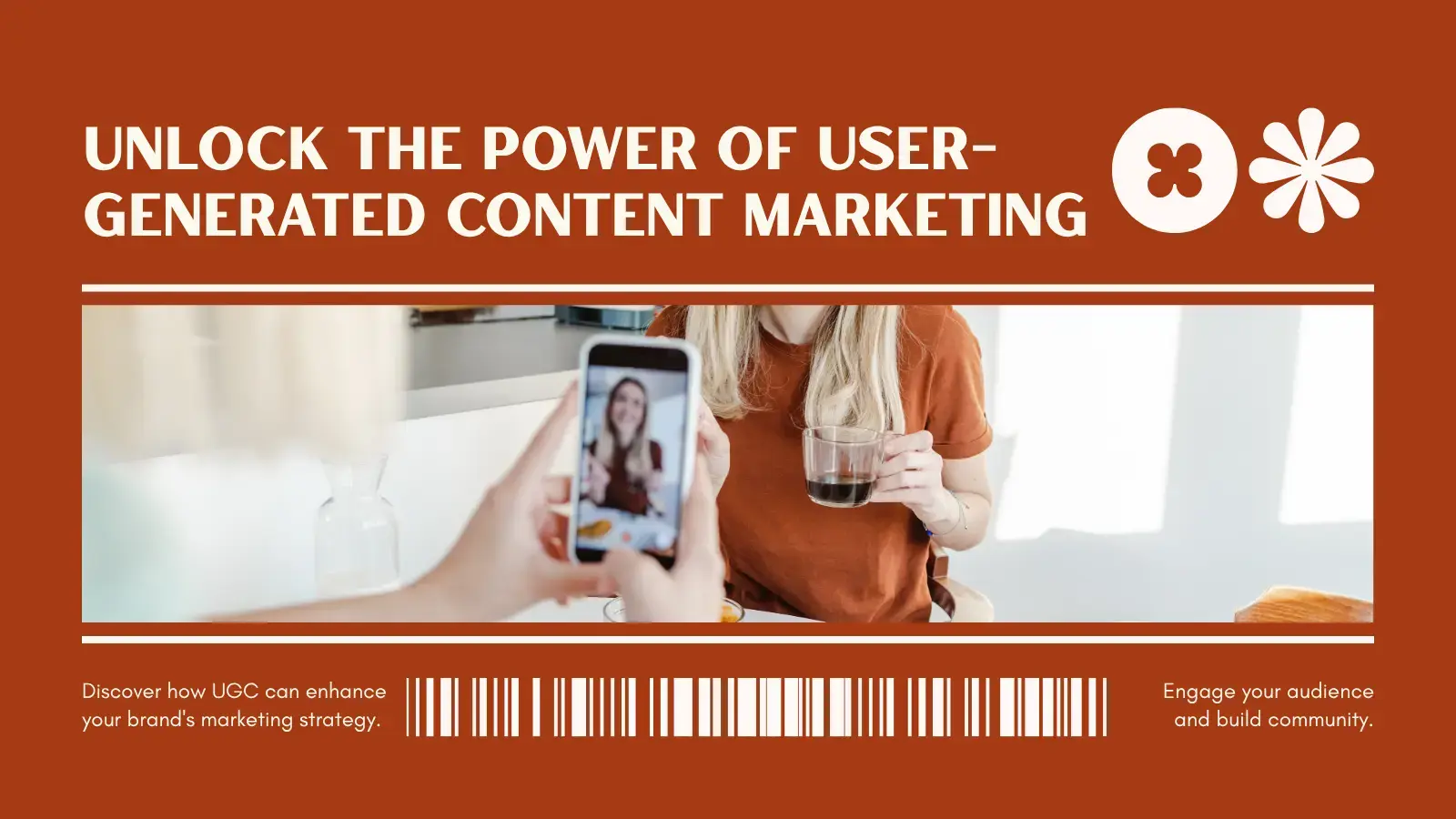
What is User-Generated Content Marketing?

Have you ever trusted a friend’s recommendation over a flashy commercial? UGC marketing involves leveraging content created by customers—such as reviews, social media posts, photos, videos, or blog comments—to promote a brand. Unlike traditional advertising, UGC feels authentic because it comes from real users, not marketers. Research suggests that 79% of consumers trust UGC more than brand-created content v (Stackla, 2021). Why do you think authenticity matters so much in marketing today?
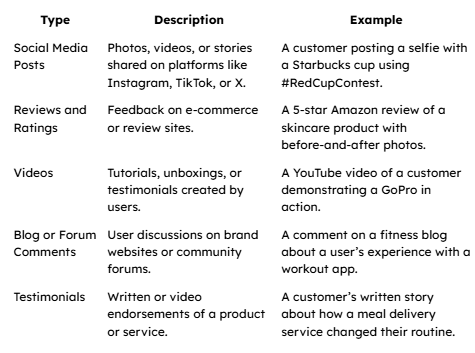
UGC can take many forms:
- Social Media Posts: Customers sharing photos or videos of products on platforms like Instagram or TikTok.
- Reviews and Testimonials: Ratings or written feedback on sites like Amazon or Yelp.
- User Videos: Tutorials, unboxings, or vlogs featuring a brand’s products.
- Blog Comments or Forum Posts: Discussions on brand websites or community platforms.
For example, GoPro’s marketing heavily relies on user-submitted videos of adventures, showcasing the camera’s capabilities through real experiences. How might a customer’s video of using a product influence others compared to a professional ad?
Why is UGC Marketing Effective?
What makes a marketing campaign resonate with consumers? UGC’s effectiveness stems from its authenticity and relatability. Here are key reasons why it works:
- Builds Trust: Consumers are skeptical of polished ads. A 2023 study found that 90% of consumers trust peer recommendations over traditional advertising (Nielsen). How does seeing a real customer’s experience make you feel about a brand?
- Increases Engagement: UGC encourages interaction. For instance, Coca-Cola’s #ShareACoke campaign prompted users to post personalized bottle photos, generating millions of social media interactions.
- Cost-Effective: Since customers create the content, brands save on production costs. Have you considered how much a business might spend on professional ads versus leveraging free customer content?
- Enhances SEO: UGC like reviews or blog comments can improve search engine rankings by adding fresh, keyword-rich content. Why might search engines favor user content over static brand pages?
A case study from Airbnb shows UGC’s impact: user-hosted photos and reviews on their platform drive bookings by showcasing authentic travel experiences.
Types of User-Generated Content
Benefits of UGC Marketing
Why would a business invest time in UGC? The benefits are numerous:
- Authenticity: UGC feels genuine, as it’s created by real users, not marketers. A 2024 report by Hootsuite found that 68% of consumers are more likely to purchase after seeing UGC (Hootsuite, 2024).
- Community Building: Encouraging UGC fosters a sense of belonging. For example, Lululemon’s #TheSweatLife campaign invites users to share fitness stories, creating a community around the brand.
- Increased Conversions: UGC can drive sales. A study by Bazaarvoice showed that products with UGC have a 12% higher conversion rate (Bazaarvoice, 2023).
- Scalability: UGC can be repurposed across channels—social media, websites, or ads—maximizing its reach.
Challenges of UGC Marketing
What could go wrong when relying on customer content? While powerful, UGC comes with challenges:
- Authenticity Concerns: Some brands face accusations of faking UGC. How would you ensure content is genuinely user-created?
- Negative Content: Customers may post critical reviews or inappropriate content. A 2022 study found that 30% of brands struggle with managing negative UGC (Sprout Social). How might a brand handle a negative review without losing trust?
- Legal Issues: Using UGC without permission can lead to copyright or privacy issues. Have you considered what permissions a brand needs to repost a customer’s photo?
- Moderation Needs: Brands must monitor UGC to ensure it aligns with their values, which can be time-consuming.
Strategies for Implementing UGC Marketing

Strategies for Implementing UGC Marketing
How can a business encourage customers to create and share content? Here are proven strategies:
- Create Campaigns with Hashtags: Encourage users to share content with branded hashtags, like Starbucks’ #RedCupContest. Why do you think hashtags make it easier for brands to find UGC?
- Run Contests or Challenges: Offer incentives like discounts or prizes. For instance, Adobe’s #AdobePerspective campaign rewarded users for sharing creative projects.
- Feature UGC on Brand Channels: Repost customer content on your website or social media, giving credit to the creator. This builds trust and encourages more submissions.
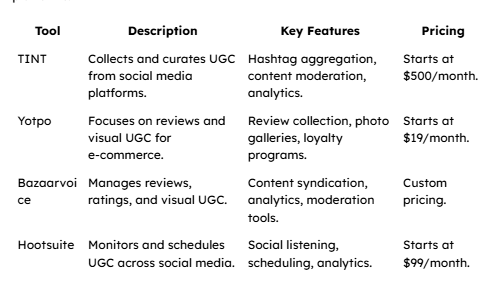
- Use Tools for Tracking: Platforms like TINT or Yotpo help collect and curate UGC. How might these tools save time for a small business?
- Engage with Contributors: Respond to UGC with comments or likes to show appreciation. Why might this encourage more customers to participate?
Conclusion
Founder & CEO @ Hubxpert. My goal is to make every company using HubSpot succeed in their marketing organisation and automation.

Ratul Rahman
Table of Contents:

Subscribe to our newsletter

Do You Need a Healthcare-Specific CRM, or HubSpot?
Some practices outgrow HubSpot. Most don't. Here is the real threshold test, and where a healthcare-specific CRM actually wins.
Referral Tracking Software or Your CRM? A Healthcare Guide
HubSpot has no native referral object. Here is how referral tracking actually gets built inside a CRM, and when you need dedicated software instead.

HubSpot at Enterprise Scale: Fix Pipeline Velocity First
Slow pipeline velocity often gets blamed on HubSpot outgrowing enterprise needs. Here's how to diagnose the real cause before a costly Salesforce migration.
Syncing Invoices Between HubSpot & Your Accounting Software
A healthcare CRM tracks inquiries as records, moves them through a visible pipeline, and automates the follow-up. Here is how.

CRM for Healthcare: How It Actually Works Day to Day
A healthcare CRM tracks inquiries as records, moves them through a visible pipeline, and automates the follow-up. Here is how.

HubSpot EHR CRM Integration: What Actually Syncs
No native HubSpot EHR connector exists yet. Here is how EHR CRM integration really works, and what should never sync.
-
Do You Need a Healthcare-Specific CRM, or HubSpot?
hello
-
Referral Tracking Software or Your CRM? A Healthcare Guide
hello
-
HubSpot at Enterprise Scale: Fix Pipeline Velocity First
hello
-
Syncing Invoices Between HubSpot & Your Accounting Software
hello
-
CRM for Healthcare: How It Actually Works Day to Day
hello
-
HubSpot EHR CRM Integration: What Actually Syncs
hello