





Process mapping
Mapped how renewals actually happen and where they were being lost before designing a pipeline around it.

$4,000+
Average order value per renewal
8
Reporting dashboards built
3
HubSpot Hubs in use
Retainer
Ongoing engagement
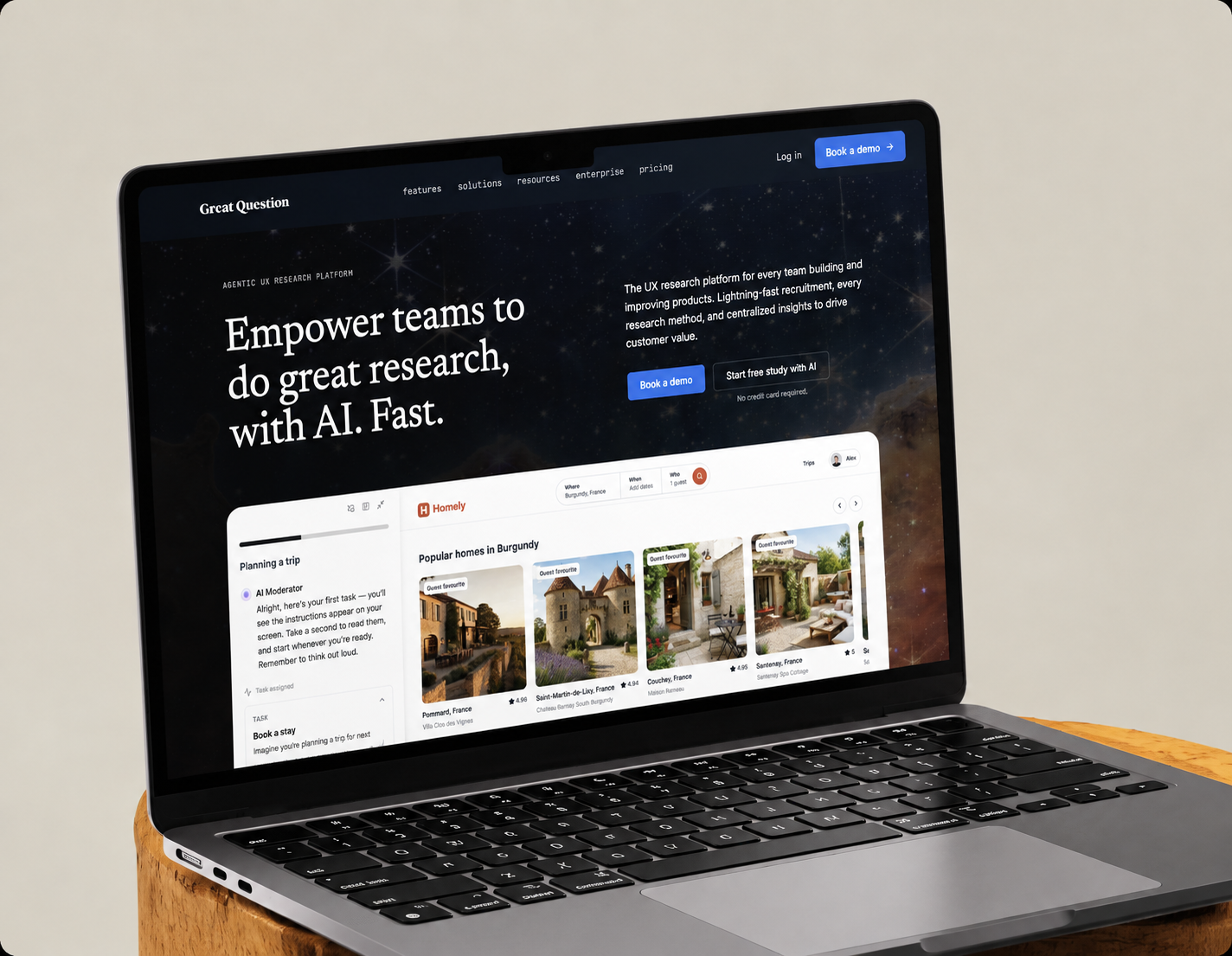
Great Question is an all-in-one UX research platform. It brings user interviews, surveys and usability testing into one system so companies can collect feedback and use it across the product lifecycle rather than at a single point in it.
A platform like that lives on renewal. The first sale proves the product can be bought; the second proves it is being used. Where revenue depends on retention rather than acquisition, the customer success motion is the revenue motion, and it needs the same structure a sales team would expect.
Great Question did not have that structure. Renewals were managed without a dedicated pipeline, contact attribution was incomplete enough that interactions could not be tracked reliably, segmentation was manual, and there was no reporting showing which accounts were healthy and which were drifting.
The customer success team was responsible for the part of the business that produces most of its revenue, and was doing it without the tooling a sales team would consider basic.
Without a structured pipeline there was no consistent process for managing a renewal, no visibility into which were approaching, and no way to intervene before one was lost.
Customer interactions could not be tracked accurately, which made personalization guesswork and made any analysis of what drives renewal unreliable.
Without automated segmentation, targeting the right customers with the right message was work somebody had to do by hand each time.
Lead and contact information that would have made outreach relevant was in LinkedIn rather than on the record the team works from.
No dashboards existed for conversion, slippage, growth, lifecycle or renewal, so strategy was set without the numbers that would inform it.
Renewals were given their own pipeline running alongside the existing sales pipelines, with the attribution and segmentation underneath it and eight dashboards over it.
Built to run alongside the existing sales pipelines with clean deal transitions between them, so renewals are managed as their own motion rather than squeezed into a process designed for new business.
Advanced deal automation connects the renewal pipeline to the rest of the stack and moves deals as customer success interactions happen.
The team can see which renewals are approaching and engage proactively, which is the entire difference between managing renewals and reacting to them.
Customer interactions are tracked accurately, which makes both personalization and any later analysis of renewal drivers possible.
LinkedIn data syncs into the portal so outreach can be personalized against current information rather than against whatever was captured at signup.
Custom lead scoring, lifecycle stages and automated lead rotation replaced manual segmentation, so targeting happens without anyone assembling a list.
Conversion, deal slippage, growth metrics, KPIs and lifecycle stages, original source, renewal pipeline and sales pipeline, each answering a separate question.
The renewal pipeline came first because it defines what everything else is measuring. Attribution, segmentation and reporting were then built to feed and read it.
Mapped how renewals actually happen and where they were being lost before designing a pipeline around it.
Built the dedicated renewal pipeline alongside the existing sales pipelines with clean deal transitions.
Implemented advanced deal automation to connect the pipeline to the rest of the stack and to customer success activity.
Built the contact attribution system and synced LinkedIn data into HubSpot.
Implemented custom lead scoring, lifecycle stages and automated lead rotation.
Built eight dashboards covering conversion, slippage, growth, KPIs and lifecycle, source, renewal and sales pipelines.
Great Question now runs renewals through a dedicated pipeline with tracked attribution, automated segmentation and reporting across eight views. The engagement continues on retainer.
$4,000+
Average order value per renewal
8
Reporting dashboards built
3
HubSpot Hubs in use
Renewal AOV above $4,000. With the renewal pipeline in place, customer retention improved and average order value per renewal reached over $4,000.
Customer success works proactively. Approaching renewals are visible in a pipeline, so the team engages before a renewal is at risk rather than after.
Interactions are tracked accurately. Contact attribution makes personalization possible and makes analysis of what actually drives renewal reliable.
Segmentation runs itself. Lead scoring, lifecycle stages and automated rotation replaced work that was being done by hand.
Outreach uses current information. LinkedIn integration keeps contact data fresh, so personalization reflects where someone is now rather than where they were at signup.
Eight dashboards support the decisions. Conversion, slippage, growth, KPIs, source, renewal and sales pipelines give leadership a complete read rather than a partial one.
Tonmoy and Ratul have been fantastic partners for Great Question. We've relied on their capabilities to help us stand up our RevOps functions, and have been consistently impressed with their reliability and responsiveness. They've also been fantastic in helping us work through ambiguity and explore alternative solutions to tricky HubSpot questions. Would highly recommend them.
The dedicated renewal pipeline running alongside the existing sales pipelines.
Deal automation moving renewals as customer success interactions happen.
Contact attribution and synced LinkedIn data on the customer record.
The eight dashboards covering conversion, slippage, growth, KPIs and lifecycle, source, renewal and sales pipelines.
Because they are a different motion. A renewal starts from an existing relationship with usage history behind it, and the stages, timing and owner are all different from new business.
It makes personalization accurate and makes any analysis of renewal drivers trustworthy. Without it, both are guesswork dressed as insight.
Conversion, deal slippage, growth, KPIs and lifecycle, original source, renewal pipeline and sales pipeline are eight separate questions. Combining them produces a dashboard that answers none of them.
Current contact information on the record the team works from, so outreach reflects a person’s present role rather than the one they had when they signed up.
Great Question is an ongoing retainer. Renewal motions change as the customer base grows, so the reporting and segmentation are maintained rather than delivered once.
Ready to Build the Engine Behind Your Growth?
If renewals are where your revenue actually comes from, they deserve the same structure your sales pipeline has. We will map how your renewals run today and show you what a dedicated pipeline, clean attribution and real reporting would change.