







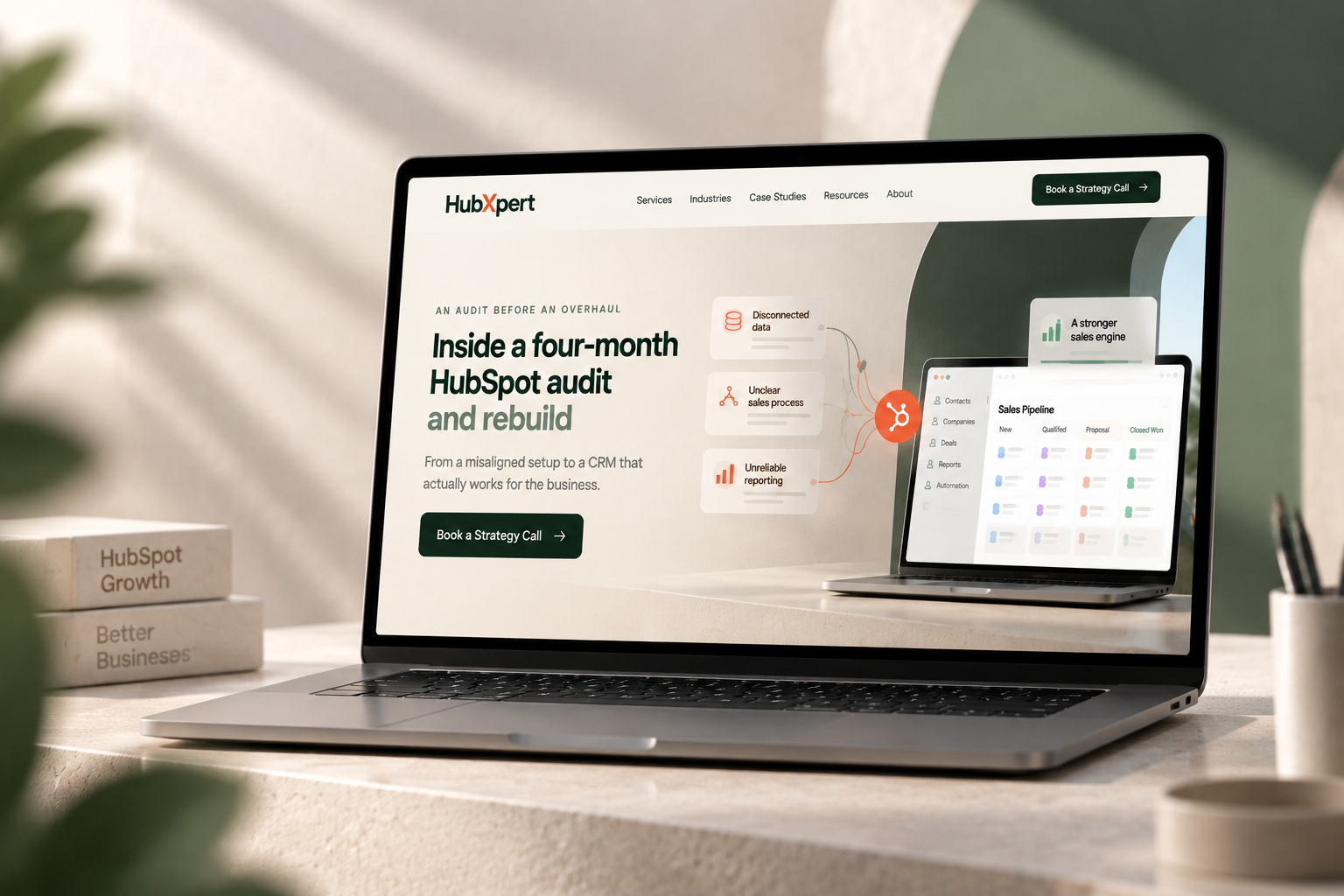






















HubSpot for Vertical SaaS: Niche Buyers and Onboarding Together

You sell into one industry, and one day there are no new companies left to call. Growth then has to come from inside the accounts you already have. HubSpot tracks module adoption, moves non-technical buyers off a legacy system in stages, and treats embedded payments as a revenue line rather than a feature.

person using a tablet beside a coding laptop near server racks

Teams that leveled up their growth with HubXpert

Company logo (3)
Company logo (2)-1
Company logo (1)-1
Company logo-1
Icon Group 1-1
Company logo (4)-1
Company logo (3)
Company logo (2)-1
Company logo (1)-1
Company logo-1
Icon Group 1-1
Company logo (4)-1
The Reason

Why Vertical SaaS Companies Need More Than a Generic CRM

Generic CRMs assume an expanding market of new logos. A vertical eventually saturates its industry, and growth has to come from inside the accounts already won. A finite market makes expansion the only durable growth.

Your Market Has a Ceiling

Selling into one industry means new-logo growth slows, and the next stage of growth lives inside existing accounts rather than outside them. A non-technical buyer needs a plan, not a login.

Buyers Are Leaving Decades Behind

Many customers are non-technical operators leaving a paper process or a system they have run for years, so the sale is really a change management project.

Modules Sell One at a Time

A customer who bought scheduling has no idea the payments module exists, and usually nobody has asked them.

Onboarding Is the Product

A vertical buyer needs more hand-holding than a typical SaaS customer, and a slow implementation is the fastest route to churn.

Embedded Payments Are Underexploited

Payments revenue usually runs below what the customer base could support, because nobody tracks who is eligible.

Attribution Ignores Expansion

The first logo gets credited to a campaign, and the module expansion that followed gets credited to nobody.

Benefits

Key Benefits of HubSpot for Vertical SaaS

HubSpot for Vertical SaaS covers five areas where saturation makes expansion the only growth left.

Grow Inside Existing Accounts

Track module adoption and expansion opportunity in every account. Implementation stages protect the revenue.

  • Map the modules

    What each account owns.

  • Score expansion fit

    Usage, size, and sector.

  • Flag the gap

    A missing module worth a conversation.

  • Report penetration

    Modules per account.

Built for account data.

Role-based access, with billing and contract detail kept where they belong.

  • 231% More inbound leads
  • 59% Higher deal close rate
  • 20% More tickets closed
Case Studies

Our Featured Works

A curated selection of HubSpot implementations and digital marketing campaigns that moved the needle for our clients.

SAAS

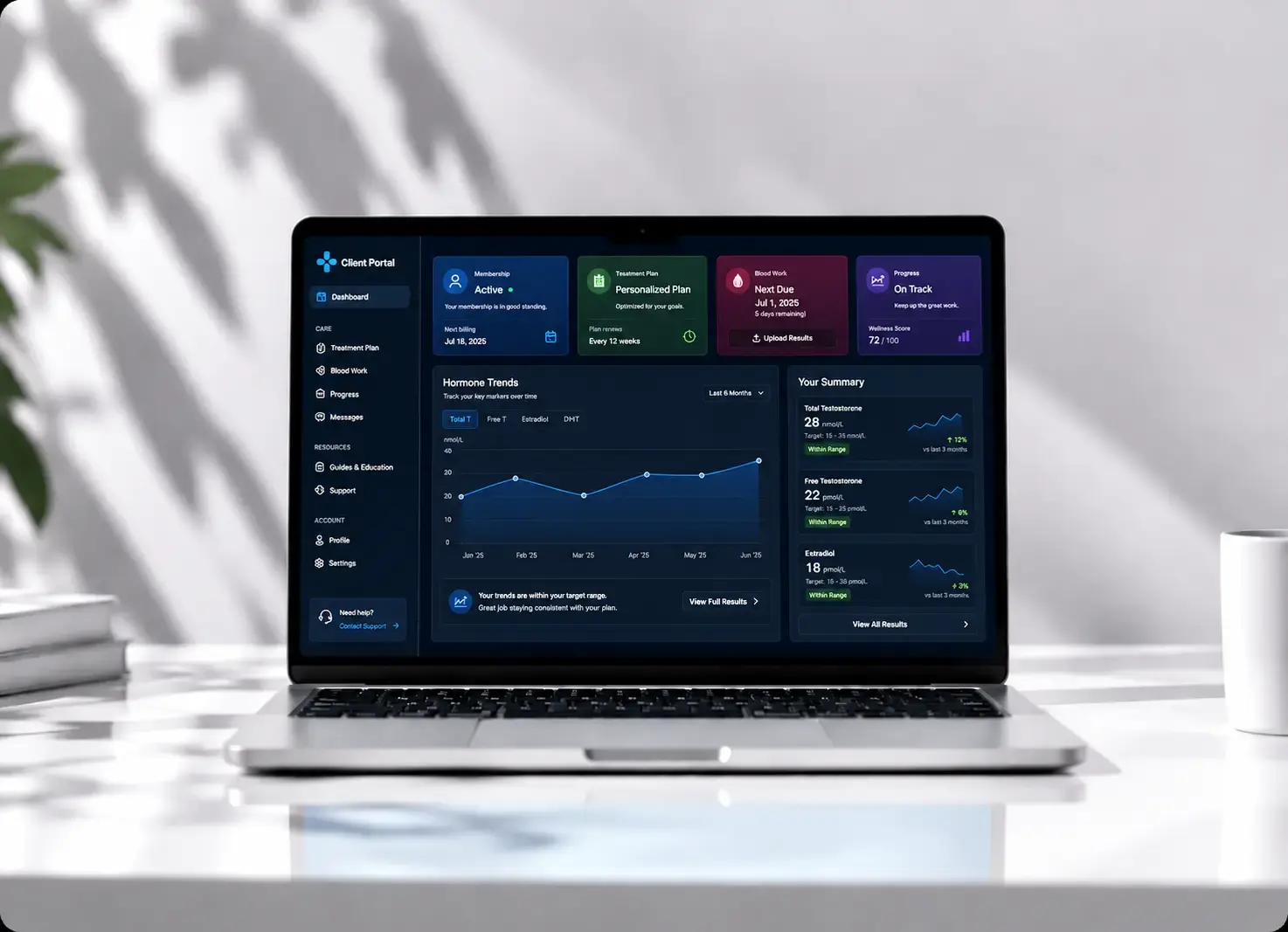
SystemHUB Got Efficiency with HubSpot Migration & Advanced Automation

SystemHub is a business process documentation platform that helps companies capture, organize, and optimize their core workflows.

SystemHUB
SystemHUB – SystemHUB Got Efficiency with HubSpot Migration & Advanced Automation

SAAS

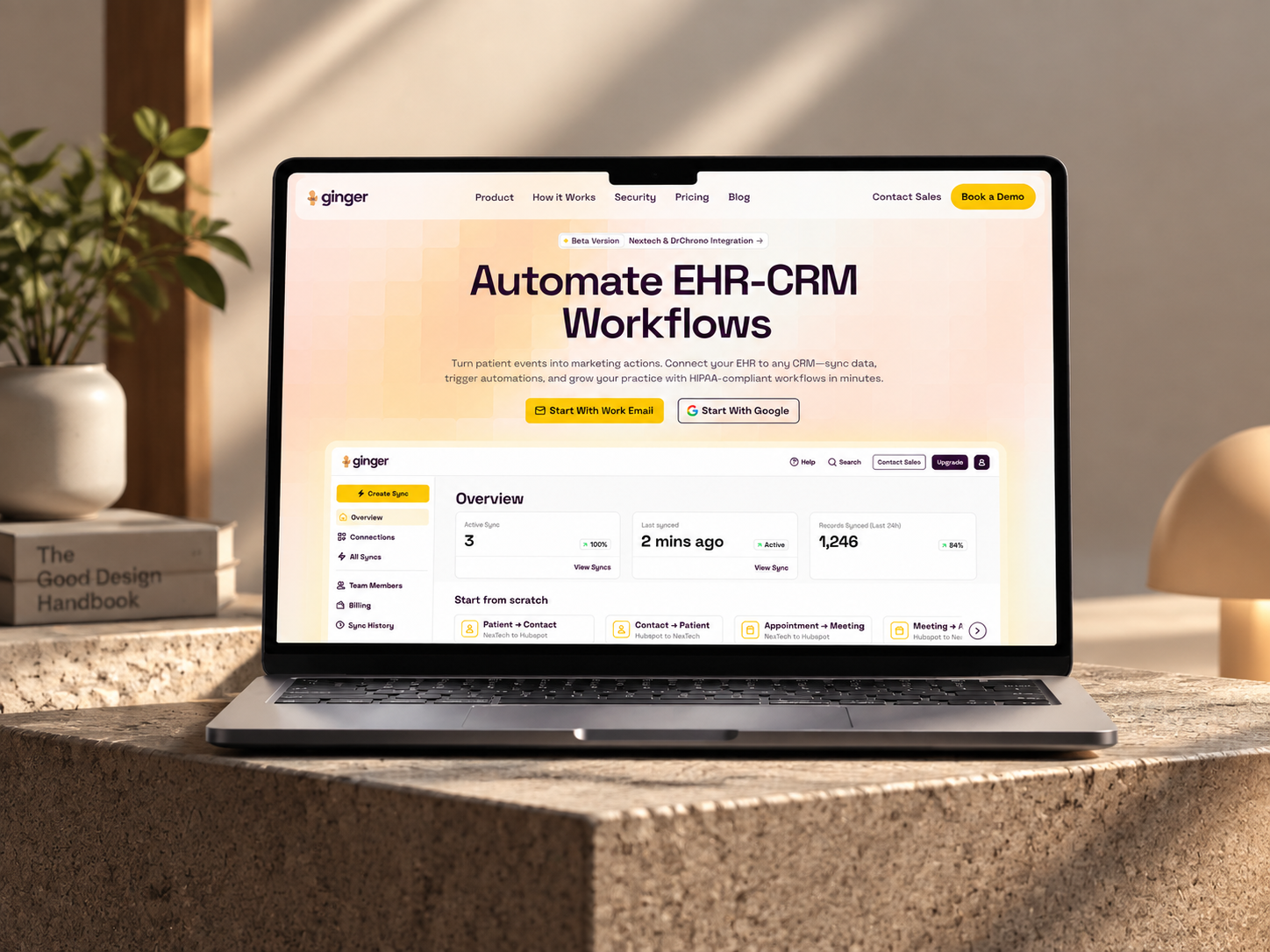
Gander Increased Customer Lifetime Value by 10% With HubSpot

Gander is a SaaS platform that specializes in simplifying the process of curating and displaying high-quality videos

Gander
Gander – Gander Increased Customer Lifetime Value by 10% With HubSpot

SAAS

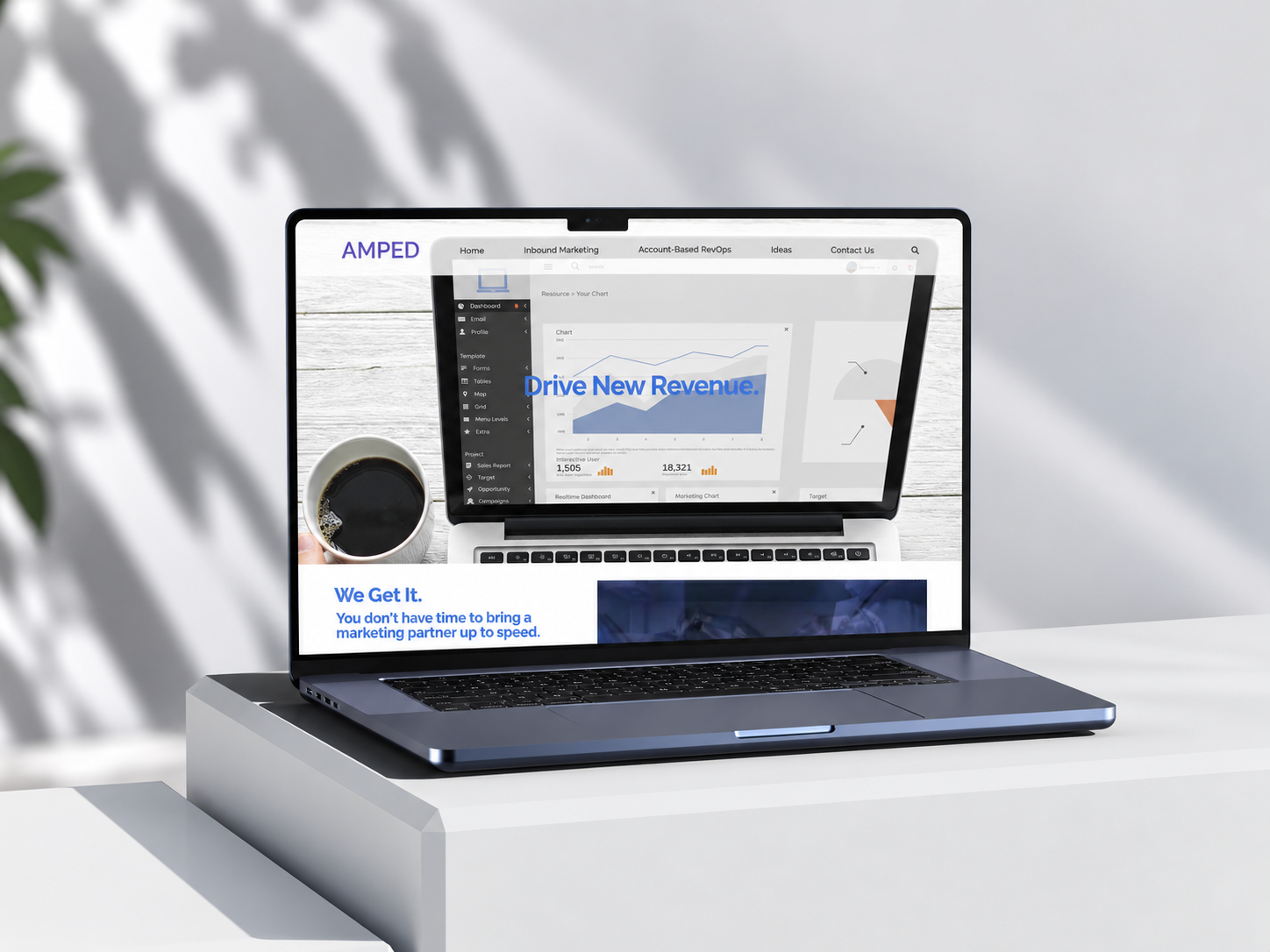
Great Question Increased Customer Renewal AOV to $4,000

Great Question is an all-in-one UX research platform that helps companies collect user feedback, conduct surveys, and engage in meaningful conversations.

Great Question
Great Question – Great Question Increased Customer Renewal AOV to $4,000
HubSpot Usage

How Vertical SaaS Companies Use HubSpot From Logo to Wallet Share

Step 1

Win the Account

Sector-specific proof lands the logo, and the account record carries segment, size, and current system. Buyers are replacing a familiar process.

Step 2

Implement in Stages

Milestones, training by role, and adoption checks run until the old process is genuinely retired. The implementation is where the relationship is won or lost.

Step 3

Expand the Modules

A missing module is raised at the right moment, with the account's own usage as the argument. Module talks land at a review.

Step 4

Switch the Payments

Eligible accounts hear about processing at renewal, and volume is tracked once they move. Payments switch at renewal, almost never mid-term.

Workflow & Triggers

Example Vertical SaaS Workflows We Can Automate in HubSpot

These are the workflows we build most often when we set up HubSpot for Vertical SaaS, tuned to a market with a ceiling and accounts worth growing. Every milestone has an owner and a date.

woman showing code on a tablet to a colleague in a glass-walled office
  1. Implementation Milestones

    Each stage has an owner and a date, and two weeks idle raises a task for the implementation lead. Two weeks idle raises a task.

  2. Adoption Check

    If the team is not using the system after go-live, a training task is raised rather than a reminder email. A missing module is raised at the next review.

  3. Module Gap Alert

    An account matching the profile for a missing module raises a conversation at the next review. Payments eligibility is checked at renewal.

  4. Payments Eligibility

    An eligible account hears about processing at renewal, with the volume estimate attached. A champion change raises an introduction task.

  5. Champion Change

    A new contact logging in raises a task, because champions change and relationships fade with them. Implementation age against usage is reviewed monthly.

  6. Renewal Review

    Sixty days out, usage and module history assemble into the review pack. Renewal packs assemble sixty days out.

  7. Churn Risk Report

    Implementation age against active usage, reviewed monthly.

Why HubXpert

Why Choose HubXpert for HubSpot Vertical SaaS Builds?

Vertical software companies come to us because the industry list is finite and the account list is not being worked. It also sets the reporting the leadership team will read each quarter.

HubSpot Platinum Partner

Certified platform expertise, with a track record across vertical SaaS go-to-market builds.

Custom Vertical Workflows

Built around your modules, sector, and implementation stages. No generic templates.

Advanced Automation

Multi-step workflows and conditional logic built for long implementations.

Data Migration and Structuring

Clean imports from your existing CRM or spreadsheets, with account history intact.

Integration and API Development

An in-house team connecting HubSpot to your product, payments platform, and finance system.

Reporting and Optimization

Penetration, implementation time, and payments revenue tracked from launch.

Compliance

Practical Setup Inside HubSpot for Vertical SaaS

A vertical provider often processes payments and holds operational data belonging to its customers. The work is separation: transaction detail stays in the payments platform, contract terms stay in finance, and the CRM carries the account, the implementation, and the conversation. Transaction detail stays in payments.


  • Payment Data Separation
  • Contract Data Separation
  • Role-Based Access
  • Retention Rules
Secure data lock
HubSpot Hubs

HubSpot Hubs Recommended for Vertical SaaS

Not every team needs every hub, and most start with Sales before adding Marketing. Here is how each one lines up with a narrow market.

  • Marketing Hub

    Sector-specific content and lifecycle messaging for a small, known audience. Sector campaigns run from the same record as the account. Expansion reporting needs one source, not three exports.

  • Sales Hub

    Built for expansion inside accounts, as a HubSpot Sales Hub implementation for a finite market. Implementation questions sit on the account, not in a shared inbox.

  • Service Hub

    Where implementation questions and support sit on the account record. Sector guides get edited without a developer. Most teams start with Sales, then add Marketing as the sector list narrows.

  • Content Hub

    Powers sector guides and comparison pages, where a narrow audience researches deeply. One record links the logo, the modules, and the payments. Support answering from the account record shortens every call.

  • Operations Hub

    Connects product usage and payments, which is how penetration stays visible. Sector content earns trust faster than a generic library.

Our Process

Our Process for Implementing HubSpot for Vertical SaaS

Step 1.

Discovery and Market Analysis

We map your modules, sector concentration, and implementation process, and identify where expansion is currently invisible. It also sets the reporting the team will read each month.
Discovery and Market Analysis illustration
Step 2.

CRM Architecture and Pipeline Planning

Account, module, and implementation properties mapped to how accounts are actually grown. Stages mirror how a logo becomes a three-module account.
CRM Architecture and Pipeline Planning illustration
Step 3.

Automation and Integration Setup

Workflows built, product and payments integrations connected, and dashboards created. Every automation is tested before launch. Consent rules are configured before the first send.
Automation and Integration Setup illustration
Step 4.

Team Training and Adoption

Hands-on training for sales, implementation, and customer success on the fields that drive expansion.
Team Training and Adoption illustration
Step 5.

Reporting and Optimization

Once live, we monitor penetration and implementation time, and refine the model as modules are added.
Reporting and Optimization illustration
FAQ

Questions You Might Have

Does HubSpot work for vertical SaaS?

Yes. It runs expansion inside a finite market: module adoption, implementation stages, payments eligibility, and renewal, while your product keeps usage and transactions. Most teams see the difference in the first two quarters. The CRM carries the expansion, not the invoice.

Our market is nearly saturated. What does that change?

Everything shifts to wallet share, so the CRM has to show what each account owns, what it could own, and who is still using the old process. Penetration is tracked, so the improvement is measurable. Every workflow is tested against real accounts first. Transaction detail never sits in the CRM.

Can HubSpot support non-technical buyers?

Implementation runs in stages with training by role and adoption checks, which is what a change management sale actually needs. The sequence is matched to the module and the segment. Implementation reviews run weekly.

Can HubSpot track module expansion?

Each module is a property, so a gap is visible on the account, and the conversation is raised at the review rather than in a blast. Nothing is assumed native until the connector is confirmed. Payments prompts follow the contract term.

How does payments revenue fit in?

Eligible accounts are flagged, the switch is raised at renewal with a volume estimate, and processing revenue is reported by segment. Transaction detail never sits in the CRM.

How do you handle transaction data?

Transaction detail stays in the payments platform, contract terms stay in finance, and the CRM carries the account and the conversation. That is how cost per logo becomes visible.

Can HubSpot catch implementation stalls?

Two weeks idle raises a task, and a champion change raises another, because those two are the usual precursors to churn. We map modules before anything is built.

How long does an implementation take?

Most run four to six weeks, with integrations usually the longest part. Account history is imported, not summarised.

Book Consultation

Ready to Grow the Accounts You Already Won?

A customer owns one module out of five, their implementation stalled in March, and nobody has mentioned payments. We build around your modules, your sector, and your implementation. No generic setup, and no account left on one module.

Takes 30 minutes
Delivered by certified HubSpot experts
The first two quarters are measured against your own penetration data

Ratul-Rahman