







Inside the build of Account Based RevOps

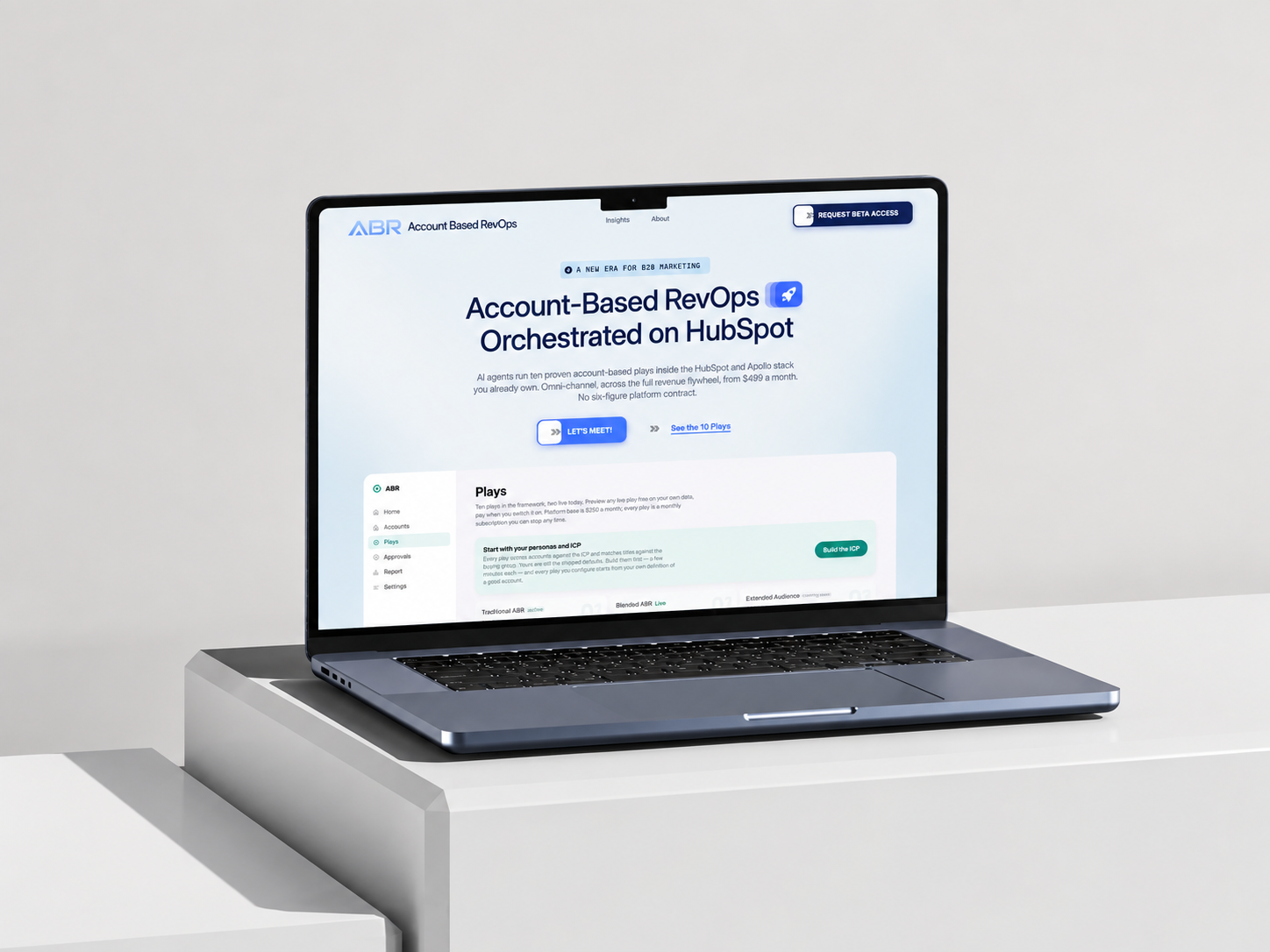
Enterprise ABM platforms sell software and leave the execution to the customer, at six figures a year. HubXpert built the inverse: AI agents that run ten named account-based plays inside the HubSpot and Apollo stack a company already owns, with every send held for human approval. Built with Amped Pipeline and Market Vantage.
8f16f4be593dd383497fe3c5631a1ee8fe905420

10

Named account-based plays built

6

Agent functions across the motion

0

Sends without human approval

ACCOUNT-BASED, WITHOUT THE PLATFORM TAX

About the product

Account Based RevOps is an agentic ABM product built by HubXpert with Amped Pipeline and Market Vantage. AI agents run ten named account-based plays inside a company's existing HubSpot portal and Apollo account, covering the motion end to end: building the target-account list, mapping the buying group, running the sequence, putting air cover behind it, scoring intent, and reporting the result in the CRM.

It came out of the same place RevvedAgents did. Account-based marketing is the motion almost every B2B company agrees it should be running and almost none actually runs, because the platforms that sell it cost six figures and still leave the execution to whoever has the bandwidth. That person does not exist at a mid-market company.

The design decision that follows from that is unusual. Rather than build another platform for the customer to operate, the product executes the plays and stops at approval. The portal stays the system of record, the agents work inside it, and everything they build remains in the customer's portal whether or not they stay a customer.

What You Will Learn:

  • 1 How to codify a consulting motion into named plays a product can execute
  • 2 Why account-based execution belongs in the CRM rather than in a separate platform
  • 3 How an approval queue makes AI-driven outbound safe enough to run on a company's own domain
THE PROBLEMS THE PRODUCT HAD TO SOLVE

The Challenges

Account-based marketing is not a new idea and the tooling is not new either. The problem was never capability. It was that the economics, the execution burden and the data location all pointed the same way, and every one of them had to be answered in the build.

  1. 1

    The platforms cost more than the motion is worth to mid-market.

    Enterprise ABM tooling is priced for enterprise budgets. A mid-market company evaluating it is asked to commit a six-figure annual line item before running a single play, which is why most of them never start.

  2. 2

    Platforms sell software and leave the execution behind.

    Buying the tool does not run the motion. Somebody still has to build the lists, write the sequences, place the air cover and read the results, and at most companies that person is already fully committed elsewhere.

  3. 3

    B2B buying stopped being one lead.

    Deals are decided by groups of ten or more people rather than by whoever filled in a form. A motion built around a single contact record is aimed at a decision-maker who does not exist.

  4. 4

    Execution data ends up outside the CRM.

    When the platform owns the data and the activity, the CRM stops being the system of record, reporting has to be stitched back together, and everything built is lost when the contract ends.

  5. 5

    Intent signals arrive in pieces.

    Site visits, CRM intent data, ad engagement, email opens and social activity each say something partial about an account, and none of them ranks accounts on their own.

  6. 6

    AI sending on a company's behalf is a reputational risk.

    Outbound goes out under the company's domain and the sender's name. Automating it without a human check exposes the brand and the deliverability of the whole portal, which is a risk no revenue leader accepts on someone else's promise.

  7. 7

    Partners cannot resell ABM without losing the client.

    Most platforms sell services alongside the software, so a partner introducing one is handing over a client and hoping to keep the relationship. That makes the channel unusable.

"Every company I talk to already agrees they should be running account-based. They have agreed for three years. What stops them is not conviction, it is that the tool costs six figures and still needs someone to run it, and that person does not exist on a mid-market marketing team."

Image (3)
Galen D. Amped Pipeline
AGENTS THAT RUN THE MOTION, NOT A DASHBOARD ABOUT IT

What we built

The build inverted the usual model. Instead of shipping a platform and leaving the work, the agents do the work and hand it back for approval. The portal is the platform, and the plays are named so a buyer can recognize their own situation instead of being handed a blank canvas.

  1. 1

    Ten named plays instead of a blank platform.

    Traditional, Blended, Extended Audience, Land and Expand, Tiered, Simple, Regional, Customer Loyalty, Account Reactivation and Conquest. Each is a defined motion with its own entry conditions, so a buyer picks the one that matches their situation and starts there.

  2. 2

    Target-account lists built inside the portal.

    Lists are ICP-filtered, enriched and tiered in HubSpot as one shared list, rather than exported to a spreadsheet that sales never opens. The list lives where the reps already work.

  3. 3

    Buying-group sourcing rather than single leads.

    Agents source and map the real decision-makers across an account instead of treating one form submission as the opportunity. That is the structural change that makes the rest of the motion match how B2B deals are actually decided.

  4. 4

    Nine-touch multi-threaded sequencing, gated by approval.

    Personalized sequences are queued across HubSpot and Apollo, and every send waits in an approval queue first. Nothing leaves under the customer's domain without a person releasing it.

  5. 5

    Omni-channel air cover.

    LinkedIn, open web, video, CTV and streaming, direct mail and event geofencing, targeted at the buying group rather than at a broad audience, so outbound lands against accounts that have already seen the company.

  6. 6

    A composite intent score.

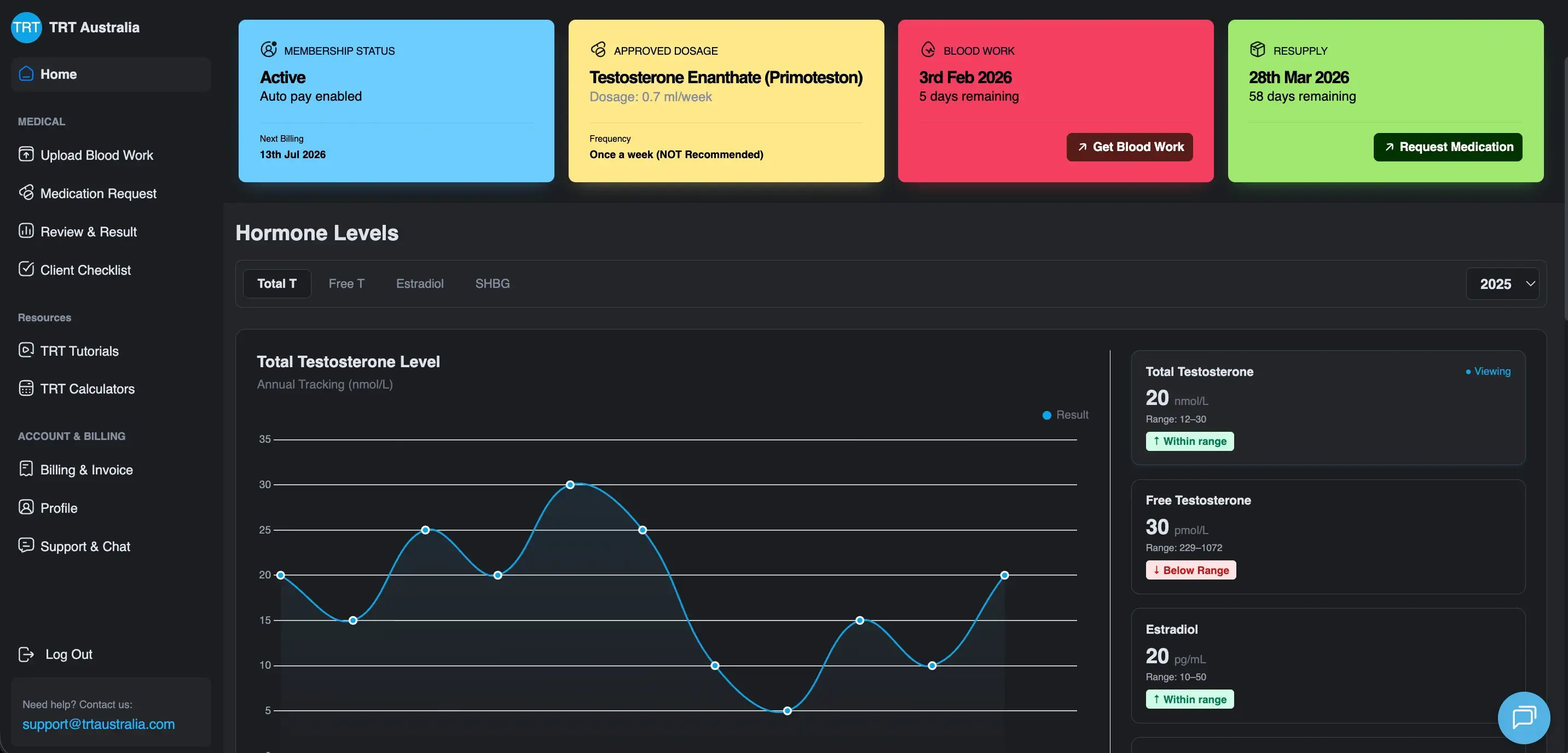
    First-party site visits, HubSpot Buyer Intent, ad click-throughs, Apollo opens and LinkedIn engagement blend into one score that ranks accounts by real interest, bottom of the funnel first.

  7. 7

    Reporting in the CRM the CFO already trusts.

    Meetings, pipeline and revenue are measured in HubSpot rather than in a vendor dashboard. The product does not grade its own homework, and the customer can audit any number back to a deal record.

  8. 8

    Nothing to lose on exit.

    There is no migration to start and nothing to lose on exit. Data, execution and reporting stay in the portal, the commercial terms are month to month, and everything the agents build remains the customer's.

  9. 9

    Partner-safe by design.

    No competing services are sold alongside the product, so an agency or a HubSpot team introducing it keeps the client and the credit. That constraint was a design requirement rather than a policy added afterwards.

We measure in the customer's HubSpot on purpose. If the number lives in our dashboard, we are grading our own homework and everyone in the room knows it. Putting it in their CRM means their CFO can audit any deal we claim, which is a harder standard to hold and the only one worth holding.

Devin L. Market Vantage
Devin L.
PLAYS FIRST, AGENTS SECOND

How We Got There

The plays were defined before any agent was built, because an agent without a named motion behind it is just a feature. The approval architecture came next, carried over from the design principle established on RevvedAgents.

Phase 1

Play definition

Codified the account-based motions the team had been running by hand into ten named plays with defined entry conditions and outputs.

Phase 2

Approval architecture

Applied the human-in-the-loop model so no send or write reaches a live portal without a person releasing it.

Phase 3

HubSpot-native data model

Built the target-account, buying-group and scoring structures inside the portal so the CRM stays the system of record.

Phase 4

Stack integration

Connected Apollo for sourcing and sequencing, plus the intent and advertising sources feeding the composite score.

Phase 5

Agent development

Built the agent functions across the motion, from list building and buying-group sourcing to sequencing, air cover and scoring.

Phase 6

In-CRM reporting

Built meeting, pipeline and revenue reporting inside HubSpot so results are auditable in the customer's own system.

WHATS SHIPPED

The Outcomes

Account Based RevOps is in beta. The outcomes below are properties of the product, not results claimed on behalf of customers, and that distinction is deliberate: a product whose whole argument is that results should be auditable in the customer's own CRM cannot make unverifiable claims about them.

10

Named account-based plays built

6

Agent functions across the motion

0

Sends without human approval

Ten named plays shipped. From enterprise Traditional ABR through to Account Reactivation and Conquest, each with its own entry conditions rather than a single generic motion.

Agents cover the full motion. List building, buying-group sourcing, sequencing, air cover, intent scoring and reporting, rather than one step with the rest left to the customer.

No send leaves without a person releasing it. Every sequence clears an approval queue first, which is what makes AI-driven outbound acceptable on a company's own domain.

Execution stays in the customer's portal. No migration to begin with, and everything the agents build remains in HubSpot regardless of whether the customer stays.

Reporting is auditable in the CRM. Meetings, pipeline and revenue are measured in HubSpot, so a CFO can trace any figure back to a deal record.

The channel was designed in. No competing services are sold alongside it, so partners can introduce the product without putting a client relationship at risk.

Before

Manual
  • Six-figure platform commitment before the first play
  • Software bought, execution left to the customer
  • A motion built around a single form-fill lead
  • Execution data living outside the CRM
  • Intent signals read separately, one channel at a time
  • Partners handing clients to a platform vendor

After

Automatic
  • Ten named plays from $499 a month, month to month
  • Agents run the motion and stop at approval
  • Buying groups sourced and mapped per account
  • Everything built stays in the customer portal
  • One composite score across first and third-party signals
  • No competing services, so partners keep the client
THE ARCHITECTURE, IN THE OPEN

Inside the Platform

e09f8792871a14e892e9b99354d762ef67dd0d51-1
WHAT PEOPLE ASK ABOUT THE BUILD

Frequently asked questions

  • It is built as an alternative to one. The plays run inside the HubSpot portal and Apollo account a company already owns, so there is no separate platform to migrate to and nothing to migrate back out of.

  • No. Every sequence clears an approval queue before a single send. Outbound goes out under the customer's domain, so a person releases it.

  • Because a blank platform puts the strategy work back on the customer, which is the reason most account-based programs never start. A named motion with defined entry conditions lets a buyer recognize their own situation and begin.

  • In the customer's HubSpot portal. External applications are connected to and directed by it rather than holding the record, and everything the agents build stays in the portal.

  • First-party site visits, HubSpot Buyer Intent, ad click-throughs, Apollo opens and LinkedIn engagement, blended into a single ranking.

  • HubXpert, with Amped Pipeline and Market Vantage, out of account-based work the three had been running by hand for clients.

bOOK a CONSULTATION

Ready to Build the Engine
Behind Your Growth?

We build the systems underneath growth. CRM, website, search, outbound, and automation, connected so your team stops doing the work software should do.

Icon-Apr-08-2026-10-02-31-8097-AM Takes 30 minutes
Icon-Apr-08-2026-10-02-31-8097-AM Delivered by certified HubSpot expert
Ratul-Rahman