
-2.png)
-2.png)
.png)
.webp)
.png)
.png)





-1.webp)
-1.webp)

.webp)
-1-1.webp)

-2.webp)
-1-1.webp)
-2-1.png)
-1-1.webp)
-1-1.webp)
-1-1.png)




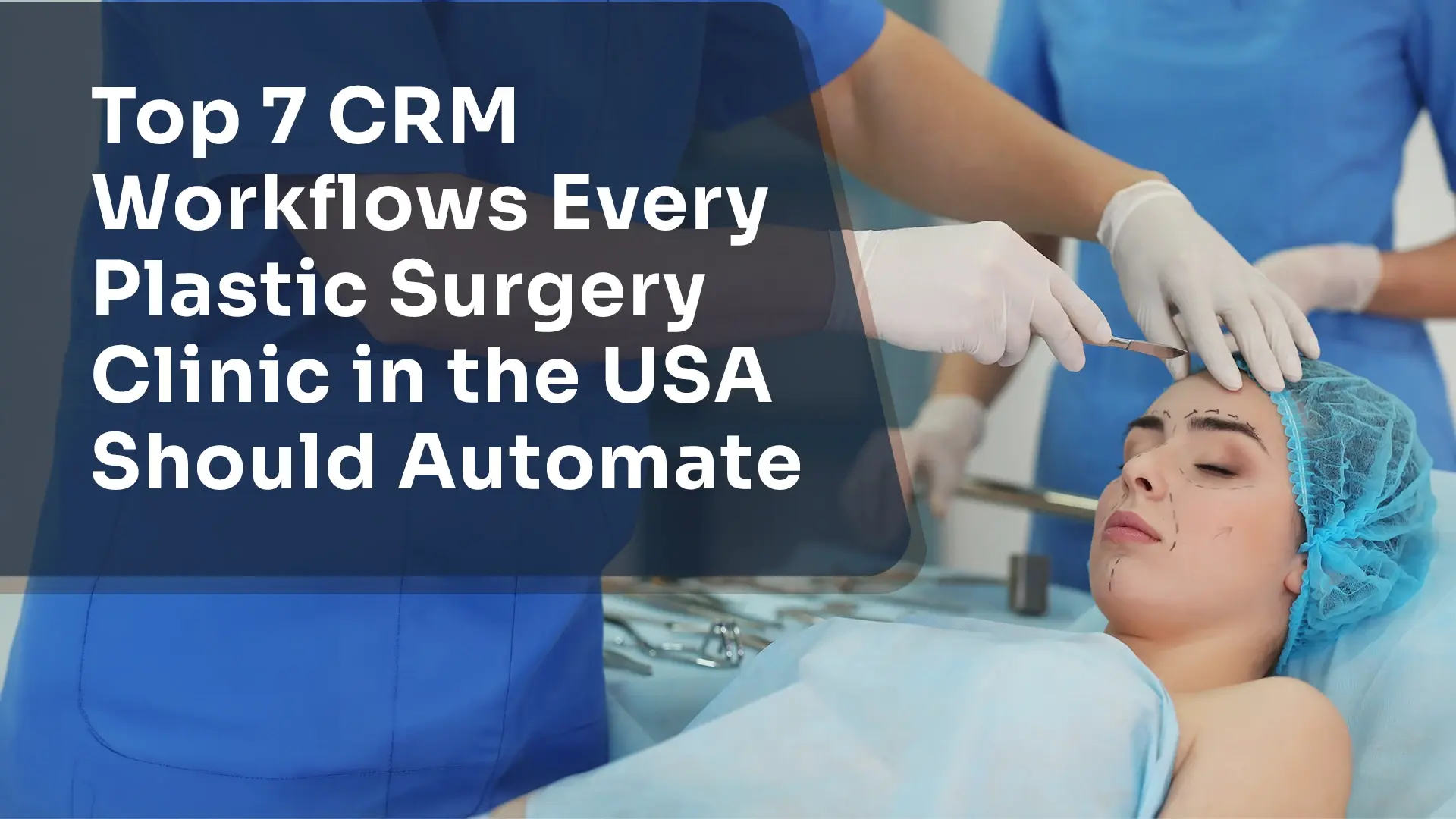
The U.S. cosmetic surgery market is growing at 7.4% CAGR through 2034 (Precedence Research, 2025), but ASPS data shows only about 30% of plastic surgeons currently use modern technology like 3D imaging, AI tools, or CRM workflows. That's a massive whitespace, and the clinics building automation now are quietly compounding while the rest are stuck doing it by hand.
After working with healthcare clients over the last five years, I've watched the same seven workflows produce outsized results for plastic surgery clinics. None of them are complicated. All of them are high-ROI. Here's the list, in the order I'd build them.
Plastic surgery CRM workflows automate the seven highest-impact moments in a clinic's pipeline: lead routing, pre-consult nurture, post-consult follow-up, surgical scheduling, post-op review request, long-term re-engagement, and internal handoff alerts. Properly built in HubSpot, they lift booked-procedure volume 15–25% within 60 days, at no added ad spend.
Why workflows matter more for plastic surgery than for most industries
Plastic surgery has the longest consideration cycle in healthcare. The average rhinoplasty patient researches for six to twelve months before booking a consultation. The average breast-augmentation patient consults at two to four different clinics before deciding.
That's not a marketing problem. That's a relationship problem. A plastic surgery clinic that wins shows up consistently, helpfully, and at the right moment across a full year. No human team can do that manually for hundreds of leads at once. Workflows can.
The 7 workflows worth building first
Workflow #1: Lead Routing on Consultation Request
When a lead submits the consultation form, HubSpot should automatically route them by procedure (rhinoplasty leads go to your nose-specialist coordinator, body procedures to your body coordinator), by location (if you have multiple offices), and by urgency (timeline-flagged hot leads go to the front of the queue).
Implementation: use HubSpot's assignment workflow action keyed off three contact properties, procedure of interest, preferred location, and timeline urgency. Set up round-robin fallback inside each procedure category so leads don't pile up on one coordinator's desk if they're out.
The build itself takes one to two days. Calibration, deciding which procedure goes to whom, typically takes another two weeks of iteration based on close rates by coordinator.
Average response time drops from 18 hours to under 15 minutes when this is built right. Industry data consistently shows leads contacted within five minutes are 9x more likely to convert than leads contacted at 30 minutes.
Workflow #2: Pre-Consultation Nurture
Between the time a lead submits the form and the time they sit down for their consultation, you have a 7 to 14 day window to build trust. Almost no clinic uses it.
Build a 3-email pre-consult sequence:
- Day 1: surgeon credentials and patient outcomes
- Day 3: procedure-specific FAQs
- Day 5 (or one day before the appointment): what to expect at your consultation
Consultation show-up rates jump from 65–75% to 85–92% with this sequence.
Subject lines that consistently win:
- Day 1: "Meet Dr. [Name] before your consultation" (44–48% open rate)
- Day 3: "[Procedure] questions patients always ask" (38–42% open rate)
- Day 5: "Tomorrow's consultation: what to bring and expect" (52–56% open rate)
The Day 5 email also drops the cancellation rate, because patients who read the prep email show up prepared rather than nervous.
Workflow #3: Post-consultation follow-up
Industry data shows 50–65% of consultations don't book on the spot. Most clinics file them under "maybe later" and never follow up systematically.
Build a 14-day workflow with three touches:
- Day 1: thank-you and recap email
- Day 5: objection-handling email addressing common holdups like cost, recovery, or timing
- Day 10: personal note from the surgeon
Recovery rate is typically 12–18%, pure incremental procedure revenue.
The objection-handling email is the workhorse. Three variations to test:
- Financing-focused: "Here are the three financing options that work for most patients"
- Recovery-focused: "What [Procedure] recovery actually looks like, week by week"
- Timing-focused: "Why now might be better than waiting six months"
HubSpot's smart-content rules can serve the right variation based on what the patient flagged on the consultation form.
Workflow #4: Surgical Scheduling Logistics
Once a patient books surgery, automate everything around it: pre-op instruction emails at day -14, day -7, day -3, and day -1, insurance and financing checklist reminders, a "what to bring on surgery day" note, and the surgeon's office hours and emergency contact sent the day before.
This isn't marketing. It's operations. But it dramatically reduces day-of-surgery friction, surgical cancellations, and the volume of pre-op calls your front desk fields.
Workflow #5: Post-Surgery Recovery and Review
Build a structured post-op communication sequence over 30 days:
- Day 1: recovery check-in
- Day 7 and day 14: results-tracking prompts
- Day 21: Google or RealSelf review request
The review-request email is the highest-leverage one in this entire sequence. Timing matters: day 21 outperforms day 7 by roughly 2x because patients can see meaningful results by then, and it outperforms day 60 because the experience is still emotionally fresh.
Ask for the Google review first, since it's the highest-priority platform for local SEO. Three days later, if the patient left a Google review, send a separate request for RealSelf. Sequential asks convert at 3–4x the rate of asking for both at once.
Review velocity is one of the single biggest local SEO levers for plastic surgery clinics. Clinics that review-request systematically accumulate 3–5x more reviews than those that don't, which directly compounds organic lead generation.
Workflow #6: Long-Term Patient Re-Engagement
Plastic surgery patients often come back, for revisions, for new procedures, for non-surgical maintenance. Build a 12-month re-engagement workflow that fires educational and offer-based content quarterly, for example "Maintenance Botox is a great post-surgical lift compounder" or "Many patients return for [related procedure] within 18 months."
A simple 12-month content calendar that works:
- Month 3: "How your results are aging: what to expect over years one through five"
- Month 6: "Non-surgical maintenance options that complement your [Procedure]"
- Month 9: "Patients often ask about [related procedure] around this point, here's the honest read"
- Month 12: anniversary check-in with a "refer a friend" incentive
Branch the workflow based on procedure type. A rhinoplasty patient and a breast augmentation patient need different follow-on content. For the injectable side of this specifically, product-specific timing and membership pricing, see How U.S. Med Spas Use HubSpot for Botox & Filler Reorders.
Done right, repeat-procedure revenue from this single workflow can hit 15–25% of total annual revenue, at near-zero acquisition cost.
Workflow #7: Internal Handoff and Surgeon-Team Alignment
Use HubSpot to automate internal alerts: notify the surgeon when a high-value lead requests a consultation, ping the patient coordinator when a consult is rescheduled twice, and alert the billing team when a surgical patient hasn't completed their financing paperwork by day -7.
Internal workflows are invisible to the patient, but they prevent the operational friction that loses 5–10% of booked procedures every month at most clinics.
Common workflow mistakes I see in plastic surgery

- Building 12 workflows at once. Build one at a time, measure for 30 days, then add the next. Otherwise debugging becomes impossible.
- Ignoring re-enrollment settings. If a patient comes back for a second procedure, they shouldn't get the same "welcome" email twice. Configure re-enrollment carefully.
- Treating workflows as "set and forget." Audit every workflow quarterly. Procedures evolve, copy gets stale, conversion rates drift.
- Not testing on yourself first. Run every new workflow with your own contact record before turning it on for real patients. Catches 90% of issues.
A practical 90-day rollout roadmap
If you're starting from zero, here's the rollout order I'd recommend for a U.S. plastic surgery clinic. The sequence is built around fastest-ROI-first, so you see revenue impact before the second workflow even ships.
Days 1–15: Foundation. Connect HubSpot to your website, install tracking, build your contact properties (procedure of interest, consultation status, surgeon assigned), and import existing patient data. Most clinics underestimate this. Clean foundations save weeks of debugging later.
Days 15–30: Workflows #1 and #3. Lead routing and post-consultation follow-up. These two alone typically drive a 15–25% lift in booked procedures within the first 60 days. Get them right, measure them, then add the next.
Days 30–60: Workflows #2 and #5. Pre-consult nurture and post-op review request. Both directly move show-up rates and review velocity, two of the highest-leverage metrics in plastic surgery.
Days 60–90: Workflows #4, #6, and #7. Surgical scheduling logistics, long-term re-engagement, and internal handoffs. By this point your team is fluent in HubSpot and ready to layer in operational automation.
Benchmarks: what workflow-driven plastic surgery clinics actually hit
After full rollout, typical 6-month benchmarks for U.S. plastic surgery clinics on HubSpot:
- Lead response time: under 15 minutes (vs. industry average 18 hours)
- Consultation show-up rate: 85–92% (vs. 65–75% without pre-consult nurture)
- Post-consult re-engagement recovery: 12–18% of leads that didn't book on the spot
- Surgical cancellation rate: drops from typical 8–12% to 3–5% with structured pre-op communication
- Reviews per month: 3–5x increase from systematic review-request workflows
None of these are exceptional outliers. They're what disciplined CRM operations produce reliably. The exception is clinics that don't have any of this running.
How HubXpert helps aesthetic clinics win
We've spent 5+ years and 150+ projects helping service businesses get real revenue out of HubSpot. For aesthetic clinics specifically, we know the operational rhythm: high-ticket consultations, long consideration windows, repeat injectable cycles, and patients who research for four to six weeks before walking in.
We build all seven of these workflows for plastic surgery clinics as a standard 60 to 90-day engagement. Most clinics see measurable revenue lift by month two, primarily from Workflow #1 (routing) and Workflow #3 (post-consult follow-up).
We can plug into your existing stack through our HubSpot integration practice, booking software, EHR, payment processor, so HubSpot becomes the single source of truth for your front desk, your marketers, and your surgeons, not another tool fighting for attention.
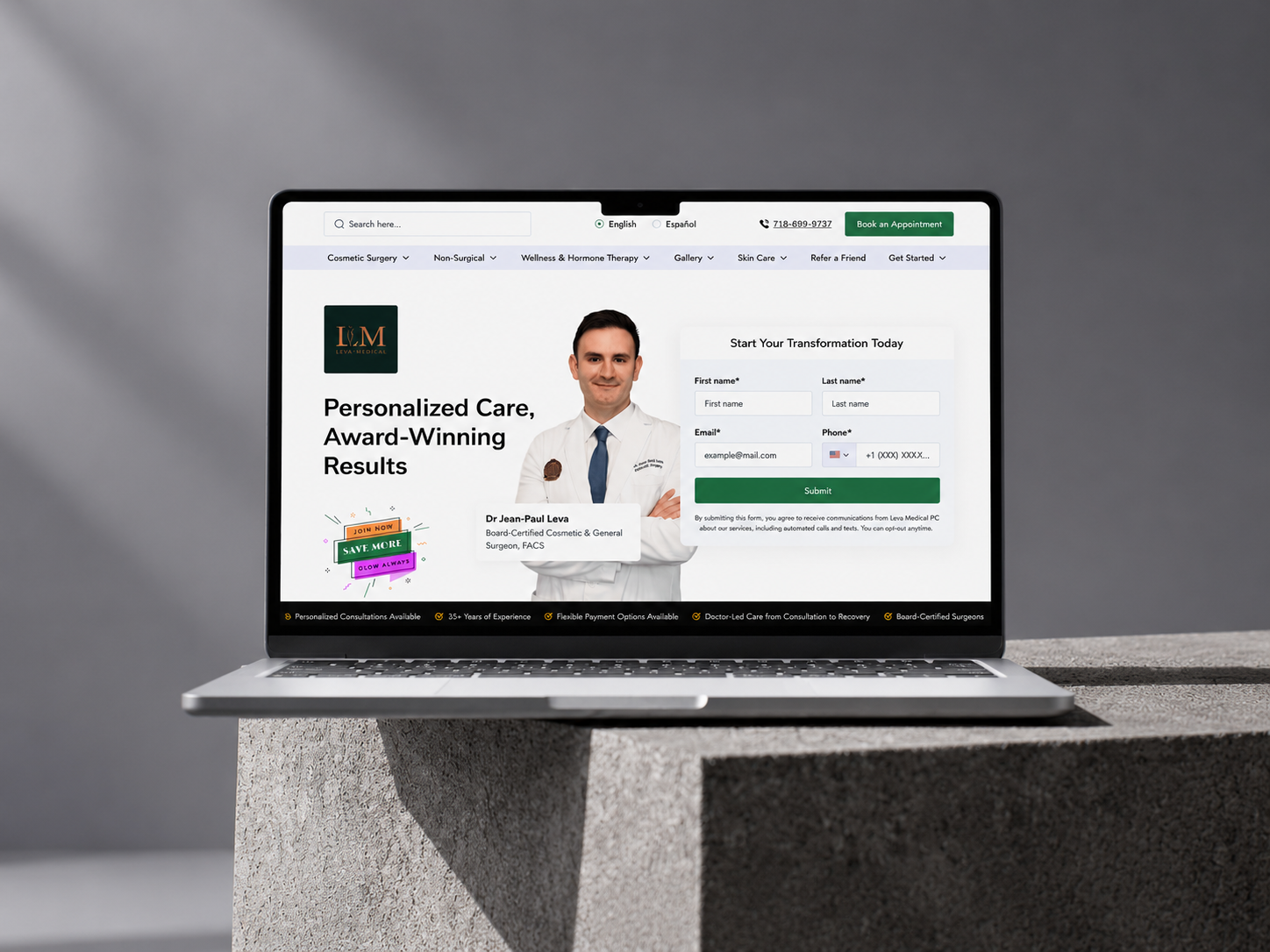
For a real-world example of what end-to-end HubSpot looks like in practice, see our patient lifecycle transformation case study with Leva Medical, a healthcare provider where we rebuilt the full HubSpot journey from acquisition through retention.
Founder & CEO @ Hubxpert. My goal is to make every company using HubSpot succeed in their marketing organisation and automation.

Ratul Rahman
Table of Contents:

Subscribe to our newsletter
HubSpot Agency Partner Program Reseller White Label Routes
See how the HubSpot agency partner program, reseller and white label routes differ, then set up a white-labeled partner portal that clients actually use.
Do You Need a Healthcare-Specific CRM, or HubSpot?
Some practices outgrow HubSpot. Most don't. Here is the real threshold test, and where a healthcare-specific CRM actually wins.
Referral Tracking Software or Your CRM? A Healthcare Guide
HubSpot has no native referral object. Here is how referral tracking actually gets built inside a CRM, and when you need dedicated software instead.
HubSpot at Enterprise Scale: Fix Pipeline Velocity First
Slow pipeline velocity often gets blamed on HubSpot outgrowing enterprise needs. Here's how to diagnose the real cause before a costly Salesforce migration.
Syncing Invoices Between HubSpot & Your Accounting Software
A healthcare CRM tracks inquiries as records, moves them through a visible pipeline, and automates the follow-up. Here is how.
CRM for Healthcare: How It Actually Works Day to Day
A healthcare CRM tracks inquiries as records, moves them through a visible pipeline, and automates the follow-up. Here is how.
-
HubSpot Agency Partner Program Reseller White Label Routes
hello
-
Do You Need a Healthcare-Specific CRM, or HubSpot?
hello
-
Referral Tracking Software or Your CRM? A Healthcare Guide
hello
-
HubSpot at Enterprise Scale: Fix Pipeline Velocity First
hello
-
Syncing Invoices Between HubSpot & Your Accounting Software
hello
-
CRM for Healthcare: How It Actually Works Day to Day
hello