

-1.svg)

-1.svg)
-3.svg)
%201-1.svg)

%202-1.svg)

-1.svg)

%201-1.svg)


%203-1.svg)


%201-1.svg)
-1.svg)

-3.svg)


Bangladesh's healthcare market reached $19.4 billion in 2025 and has been growing at 10.3% CAGR since 2010 (LightCastle Partners). The private sector now delivers 70–80% of all care, with 6,000+ private clinics and 12,000+ diagnostic centers competing for a fast-growing middle class (U.S. Trade Administration, 2026).
Dhaka's cosmetic surgery clinics sit right in the middle of that wave. Demand for rhinoplasty, hair transplants, liposuction, injectables, and skin treatments is climbing every year and patients have more options than ever. Yet most clinics I've audited in Gulshan, Banani, and Dhanmondi still run their entire patient pipeline on WhatsApp threads, Facebook Messenger inboxes, and a front-desk Excel sheet.
That's a problem. Because Dhaka cosmetic clinics actually serve two very different patient segments, and one shared system has to win both. Here's how to do it with HubSpot.
A cosmetic surgery clinic in Dhaka can use HubSpot to win patients by connecting WhatsApp Business and Facebook to the CRM, tracking ad spend across channels, automating appointment reminders, building injectable reorder workflows, and segmenting local versus diaspora patients with different cadences. Most Dhaka clinics see lead response time drop from 18 hours to under 15 minutes within 4–6 weeks of go-live.
Why Diaspora Patients Are a Growing Opportunity for Dhaka Clinics
The Bangladeshi diaspora represents a large and often underserved market for cosmetic surgery clinics. Many overseas Bangladeshis return home regularly to visit family, attend events, or spend extended periods in the country, creating natural opportunities to schedule consultations and procedures.
In addition to stronger purchasing power, diaspora patients are often more comfortable researching healthcare providers online before making a decision. They compare clinics, read reviews, explore treatment options, and evaluate credentials long before reaching out.
For clinics in Dhaka, this creates an opportunity to engage prospective patients early and build trust before they arrive in Bangladesh.
Who Are Diaspora Patients?
Diaspora patients include Bangladeshis living and working abroad in countries such as the United Kingdom, United States, Canada, Australia, and the Middle East. Many actively seek healthcare information online and rely heavily on digital communication when evaluating providers.
Why Do They Seek Treatment Abroad?
While some patients travel because of perceived quality differences, others are influenced by convenience, recommendations, or a lack of information about local options. Clinics that effectively showcase their expertise and maintain consistent communication can often compete successfully for these patients.
The Biggest Challenge Isn't Awareness. It's Trust.
Most diaspora patients don't make treatment decisions after seeing a single advertisement or visiting a clinic website once. They often spend weeks or even months researching providers, comparing options, and looking for reassurance before booking a consultation.
For cosmetic surgery clinics in Dhaka, the challenge is not always generating interest. It's building enough trust to move a prospective patient from inquiry to consultation.
Diaspora patients often have questions such as:
- Is the clinic reputable?
- Are the surgeons qualified?
- What results can I expect?
- What happens if I need follow-up care?
- Can I trust a clinic I've never visited in person?
Without a structured process to answer these questions, many leads go cold.
This is why trust-building content, patient testimonials, before-and-after results, and consistent follow-up are so important. Clinics that stay engaged throughout the decision-making process are far more likely to convert inquiries into consultations and treatments.
A CRM platform like HubSpot helps manage this process by ensuring every inquiry is tracked, every lead receives timely communication, and every interaction contributes to building confidence in your clinic.
Play 1: Connect WhatsApp and Facebook directly to HubSpot
Every WhatsApp Business and Facebook Messenger conversation flows into one inbox tied to a contact record. The front desk sees the full conversation history, knows which procedure the patient asked about, and can route hot leads to the right consultation coordinator in under 15 minutes. No more 'who replied to her last?'
Play 2: Track ad spend inside your CRM
To scale, you need visibility into your marketing spend. That's where a CRM like HubSpot comes in. You need to track every marketing channel and make sure the data flows into one system. That way, you don't just measure cost per lead — you actually know cost per patient, by channel. For a clinic spending Tk 5–10 lakh a month on Facebook ads, that single visibility shift typically reallocates 20–30% of the budget toward channels that actually produce booked surgeries.
Play 3: Appointment reminders that cut no-shows
Send automated WhatsApp and SMS reminders 24 hours and 2 hours before every consultation and procedure. No-show rates at most Dhaka clinics run 20–35% (in line with global aesthetic averages of 22–30%). Automated reminders cut that by 20–30 percentage points. For a clinic doing 80 consultations a month, that recovers 16–24 visits monthly — at zero added marketing cost.
Play 4: Reorder cycles for injectables and skin treatments
Botox lasts three to four months. Fillers last six to twelve. Yet almost no Dhaka clinic systematically reminds patients when they're due. Build a HubSpot workflow that triggers a personalized WhatsApp message exactly when each patient should rebook — based on what they had done and when. Repeat-visit rates climb from typical 45–55% to 70%+, and almost all of that is incremental revenue.
Play 5: Referral tracking — the highest-leverage play in Bangladesh
Word-of-mouth drives more aesthetic patients in Dhaka than any paid channel. But almost no clinic measures it, rewards it, or systematizes it. Build a simple referral workflow: 30 days post-procedure, send a thank-you WhatsApp with a unique referral code. Track every referred patient in HubSpot. Offer both the referrer and the new patient a 10% credit. Clinics that run this systematically see referral-as-percentage-of-new-patients move from 5% to 20%+ within six months.
How HubSpot Helps Clinics Build Trust Before the First Consultation
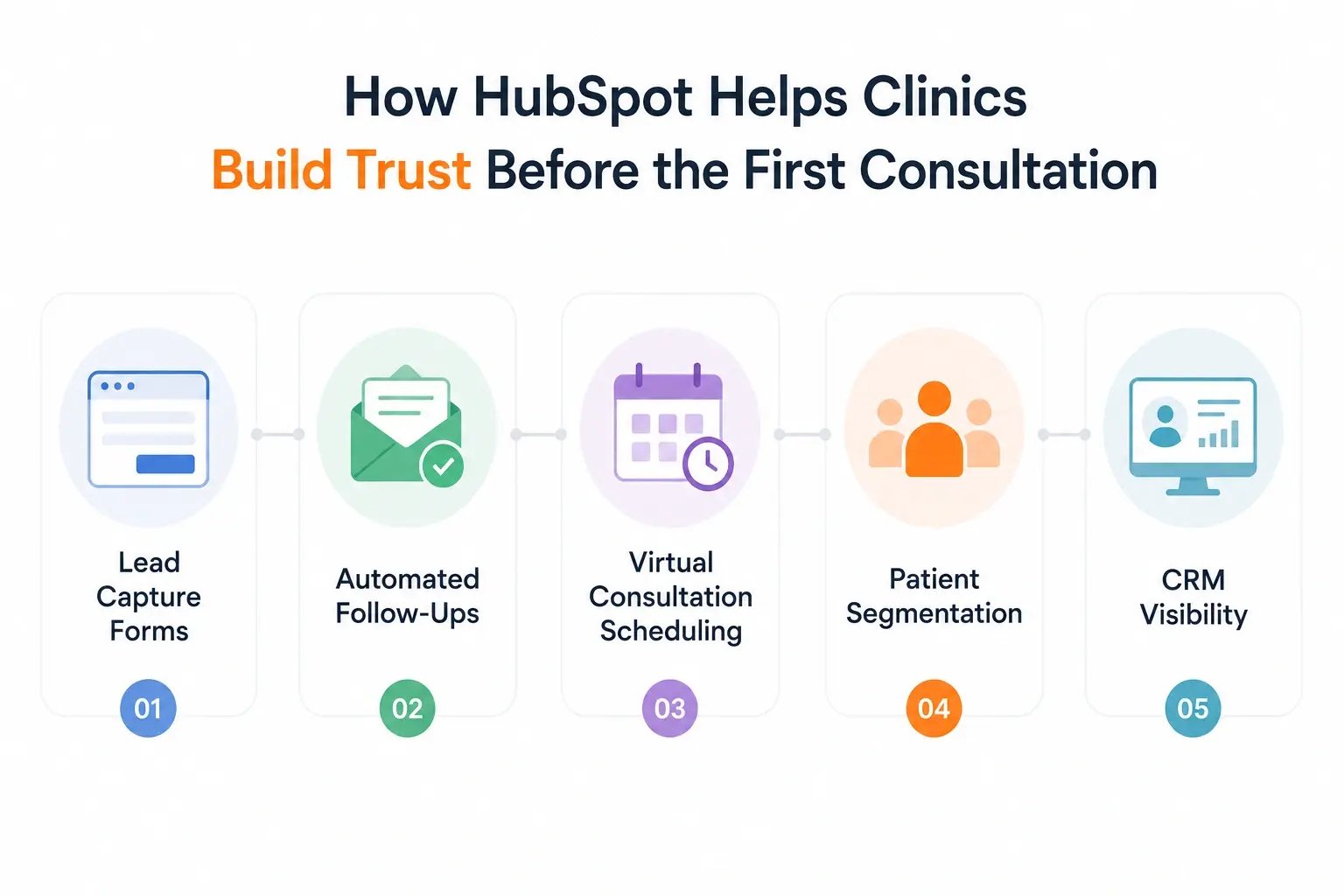 Building trust with diaspora patients requires more than a website and a contact form. Clinics need a system that captures inquiries, organizes communication, and delivers the right information at the right time.
HubSpot helps cosmetic surgery clinics create a structured patient journey from the moment a prospect expresses interest.
Lead Capture Forms
HubSpot forms can collect consultation requests directly from your website, landing pages, or advertising campaigns. Every inquiry is automatically stored in the CRM, ensuring no lead is overlooked.
Automated Follow-Ups
Instead of relying on manual responses, clinics can automatically send confirmation emails, educational resources, treatment information, and consultation invitations.
Virtual Consultation Scheduling
HubSpot can support consultation booking workflows that make it easier for overseas prospects to connect with your team before traveling to Bangladesh.
Patient Segmentation
Not every lead is interested in the same procedure. HubSpot allows clinics to segment contacts based on treatment interests, location, and engagement history, enabling more personalized communication.
CRM Visibility
Every interaction is recorded in one place. Clinic staff can see inquiry history, consultation status, email engagement, and follow-up activities, making it easier to provide a consistent patient experience.
Together, these tools help clinics build credibility, maintain communication, and nurture diaspora prospects until they are ready to book a consultation.
Play 1: Long-lead-time nurture sequences
When a diaspora patient submits an inquiry, enter them into a 90-day nurture: surgeon credentials in week one, before-and-after galleries in week three, travel-and-recovery logistics in week six, and a 'book your consultation video call' CTA in week ten. This matches their actual buying timeline instead of pushing them to book today.
Play 2: Multi-channel follow-up (email + WhatsApp + SMS)
Diaspora patients are scattered across time zones. Email reaches them at their convenience. WhatsApp gets faster responses. SMS works when they're on Bangladesh data plans during visits home. Use all three through HubSpot — the contact record tracks every channel.
Play 3: Travel-coordinated booking workflows
Add a 'planned visit dates' custom property on every diaspora contact. HubSpot then triggers a reminder workflow 30 days before their travel date: 'You're back in Dhaka next month — let's lock in your consultation and procedure dates now.' This converts the 'maybe someday' into a real surgical date.
Play 4: Post-procedure remote follow-up
After surgery, diaspora patients fly home within two to three weeks. Build a 90-day remote follow-up workflow: photo check-ins at days 7, 30, 60, and a structured review request at day 90. This keeps them engaged, captures recovery photos for marketing (with consent), and builds the goodwill that drives diaspora-to-diaspora referrals — which are the most valuable in the segment.
A Typical Diaspora Patient Journey in HubSpot
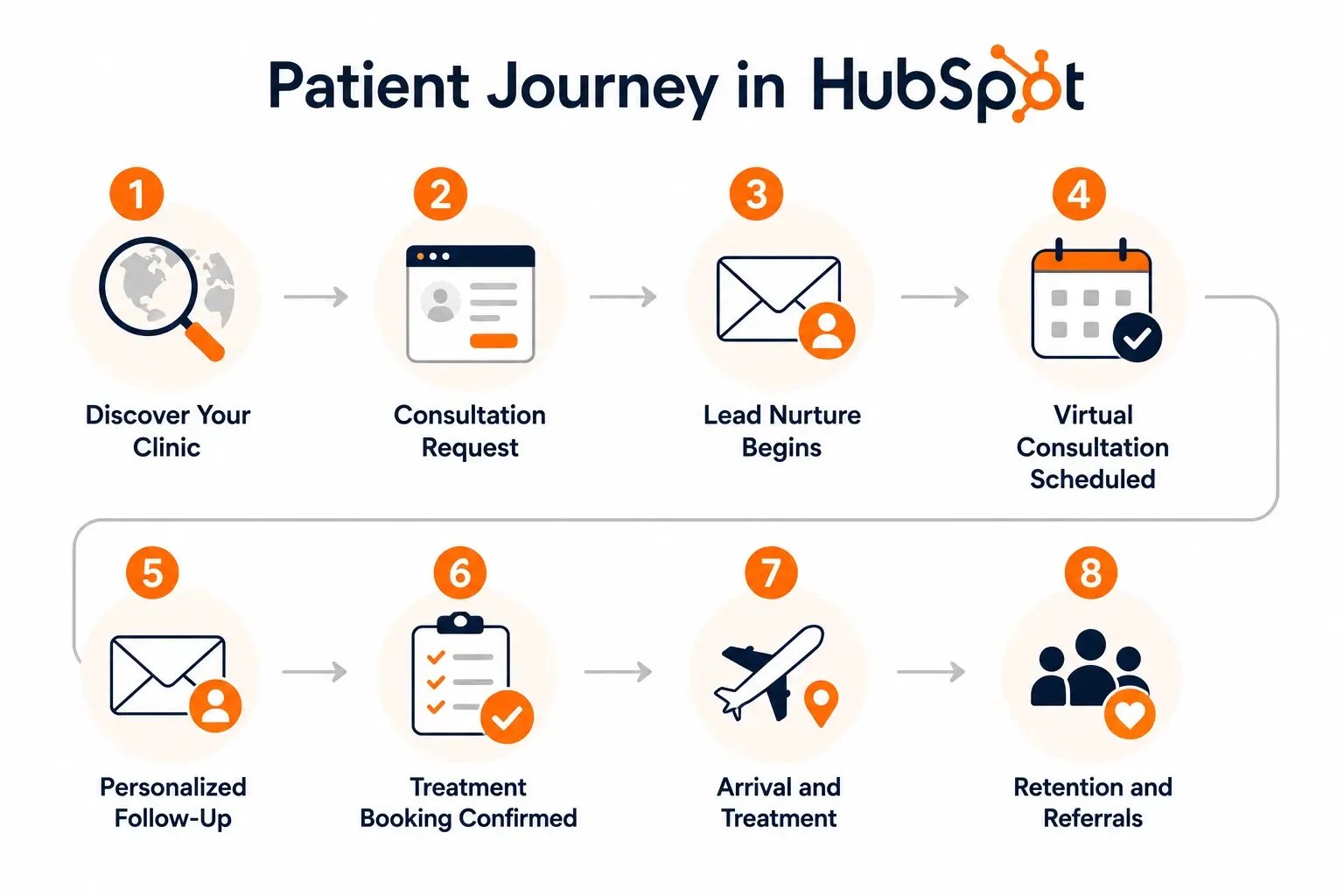 Diaspora patients rarely book a cosmetic procedure after a single interaction. Most follow a longer decision-making process that involves research, trust-building, and multiple touchpoints before committing to a consultation.
HubSpot helps clinics manage this journey from start to finish.
Step 1: Patient Discovers Your Clinic
A prospective patient finds your clinic through Google Search, Facebook, Instagram, YouTube, or a referral from family and friends.
Step 2: Consultation Request Submitted
The patient completes a consultation form on your website or landing page. Their information is automatically captured inside HubSpot.
Step 3: Lead Nurture Begins
HubSpot sends an automated welcome email along with relevant content such as surgeon profiles, procedure information, patient testimonials, and before-and-after results.
Step 4: Virtual Consultation Scheduled
After engaging with your content, the patient books a virtual consultation to discuss treatment options, pricing, timelines, and travel considerations.
Step 5: Personalized Follow-Up
Following the consultation, HubSpot automatically delivers follow-up emails, answers common questions, and shares additional resources based on the patient's treatment interests.
Step 6: Treatment Booking Confirmed
Once the patient is ready to proceed, your team can manage scheduling, communication, and preparation workflows directly through HubSpot.
Step 7: Arrival and Treatment
The patient travels to Bangladesh, completes the procedure, and receives a seamless experience supported by automated communication and coordinated follow-up.
Step 8: Retention and Referrals
After treatment, HubSpot can continue nurturing the relationship through check-ins, review requests, referral campaigns, and future treatment recommendations.
By creating a structured journey like this, cosmetic surgery clinics can build stronger relationships with diaspora patients and improve conversion rates without relying on manual follow-up.
5 Ways Dhaka Clinics Can Use HubSpot to Attract Diaspora Patients
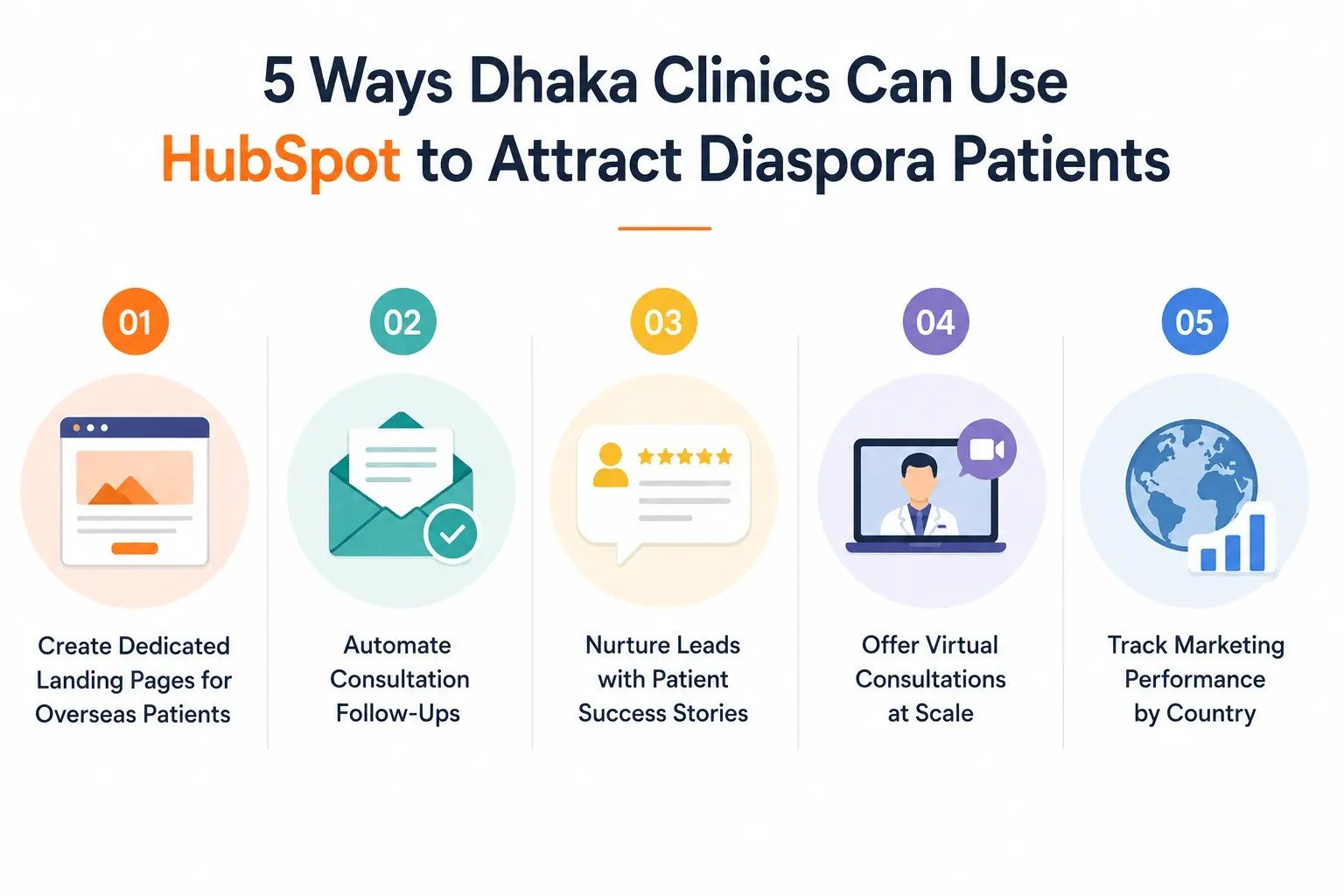 Attracting diaspora patients requires more than running advertisements. Clinics need a system that captures interest, builds trust, and nurtures prospects over time. Here are five practical ways cosmetic surgery clinics in Dhaka can use HubSpot to achieve that goal.
1. Create Dedicated Landing Pages for Overseas Patients
Diaspora patients have different concerns than local patients. Dedicated landing pages can address topics such as travel planning, virtual consultations, treatment timelines, and post-procedure care.
HubSpot makes it easy to create and optimize landing pages designed specifically for overseas audiences.
2. Automate Consultation Follow-Ups
Many clinics lose potential patients simply because inquiries are not followed up consistently. HubSpot can automatically send confirmation emails, educational content, consultation reminders, and next-step guidance.
This keeps your clinic top of mind throughout the decision-making process.
3. Nurture Leads with Patient Success Stories
Trust is one of the biggest factors influencing cosmetic surgery decisions. HubSpot workflows can automatically deliver testimonials, before-and-after results, case studies, and patient stories that help prospects feel more confident.
4. Offer Virtual Consultations at Scale
Diaspora patients often want to speak with a surgeon before making travel arrangements. HubSpot can help manage consultation requests, scheduling, reminders, and follow-up communication, creating a smoother experience for both patients and staff.
5. Track Marketing Performance by Country
Not all marketing campaigns generate the same results. HubSpot reporting allows clinics to identify which countries, campaigns, and channels are driving the most inquiries, consultations, and treatment bookings.
These insights help clinics invest more effectively in the channels that attract high-value diaspora patients.
Dhaka-specific operational considerations
Three things to factor in that don't apply the same way outside Bangladesh. First, internet reliability: Dhaka's bandwidth has improved dramatically, but front-desk staff in older clinic buildings still hit occasional dropouts. HubSpot's mobile app handles this gracefully workflows and CRM access stay functional on 4G when WiFi flakes. Second, payment realities: most patients pay in cash or via bKash/Nagad for procedures under Tk 50,000; cards become normal above that threshold. HubSpot tracks the transaction value regardless of payment method, but your booking software is where the actual payment-method data lives. Third, advertising compliance: BMDC and DGHS rules restrict certain claims in healthcare advertising. Pre-built ad templates inside HubSpot can flag claims that may need review, useful guardrail when your front-desk team is also running the Facebook page.
What Content Converts Diaspora Cosmetic Surgery Patients?
Diaspora patients often spend more time researching providers than local patients because they cannot easily visit a clinic in person. The content they consume plays a major role in determining whether they trust your clinic enough to book a consultation.
Before-&-After Results
Visual proof is one of the most effective trust-building tools in cosmetic surgery marketing. High-quality before-and-after photos help prospective patients understand potential outcomes and evaluate your expertise.
Patient Testimonials
Authentic reviews and patient stories provide social proof that reassures overseas prospects. Testimonials that discuss the full treatment experience can be particularly impactful.
Surgeon Credentials and Expertise
Diaspora patients want confidence in the professionals performing their procedures. Content that highlights qualifications, certifications, experience, and specializations helps build credibility.
Clinic Tour Videos
Videos showcasing your facility, treatment rooms, technology, and patient experience can reduce uncertainty and help overseas prospects feel more comfortable before visiting.
Procedure Guides & FAQs
Educational content that answers common questions about treatments, recovery timelines, costs, and expected results helps patients make informed decisions and reduces barriers to consultation.
Success Stories from Overseas Patients
If your clinic has worked with international or diaspora patients before, sharing those experiences can be especially effective. Prospective patients often relate more strongly to people in similar situations.
When combined with HubSpot automation, this content can be delivered strategically throughout the patient journey, helping build trust long before a consultation is scheduled.
Signs Your Clinic Is Ready to Scale Internationally
Many cosmetic surgery clinics receive occasional inquiries from overseas Bangladeshis but lack the systems needed to convert them consistently. If your clinic is experiencing any of the following, it may be time to invest in a more structured patient acquisition process.
You're Receiving Overseas Inquiries Regularly
If diaspora patients are already contacting your clinic through your website, social media, or referrals, there is likely an opportunity to increase conversions through better lead management.
Follow-Ups Are Managed Manually
As inquiry volume grows, manual follow-ups become difficult to maintain. A CRM can help ensure every lead receives timely and consistent communication.
Your Team Struggles to Track Lead Status
If it's unclear which prospects have booked consultations, received follow-ups, or are ready to move forward, your clinic may benefit from a centralized system.
You're Investing in Digital Marketing
The more you spend on advertising and content marketing, the more important it becomes to track where leads come from and which campaigns generate revenue.
You're Looking Beyond the Local Market
Clinics that want to attract patients from the UK, USA, Canada, Australia, or the Middle East need scalable processes that support communication across different time zones and decision cycles.
These are all signs that your clinic has moved beyond basic lead management and is ready for a CRM-driven growth strategy.
How HubSpot Starter Helps Clinics Get Started
Many cosmetic surgery clinics assume they need a complex technology stack to improve patient acquisition. In reality, HubSpot Starter provides many of the tools needed to begin building a structured diaspora patient funnel.
With HubSpot Starter, clinics can:
- Capture inquiries through forms and landing pages
- Store patient information in a centralized CRM
- Automate consultation follow-ups
- Send email campaigns and nurture sequences
- Track lead sources and campaign performance
- Manage patient communication more efficiently
For clinics that are just beginning to formalize their marketing and sales processes, HubSpot Starter can provide a strong foundation without requiring a large investment or a dedicated technical team.
The key is implementing the platform strategically so that every inquiry, consultation, and follow-up contributes to a better patient experience.
How HubXpert helps Dhaka cosmetic clinics
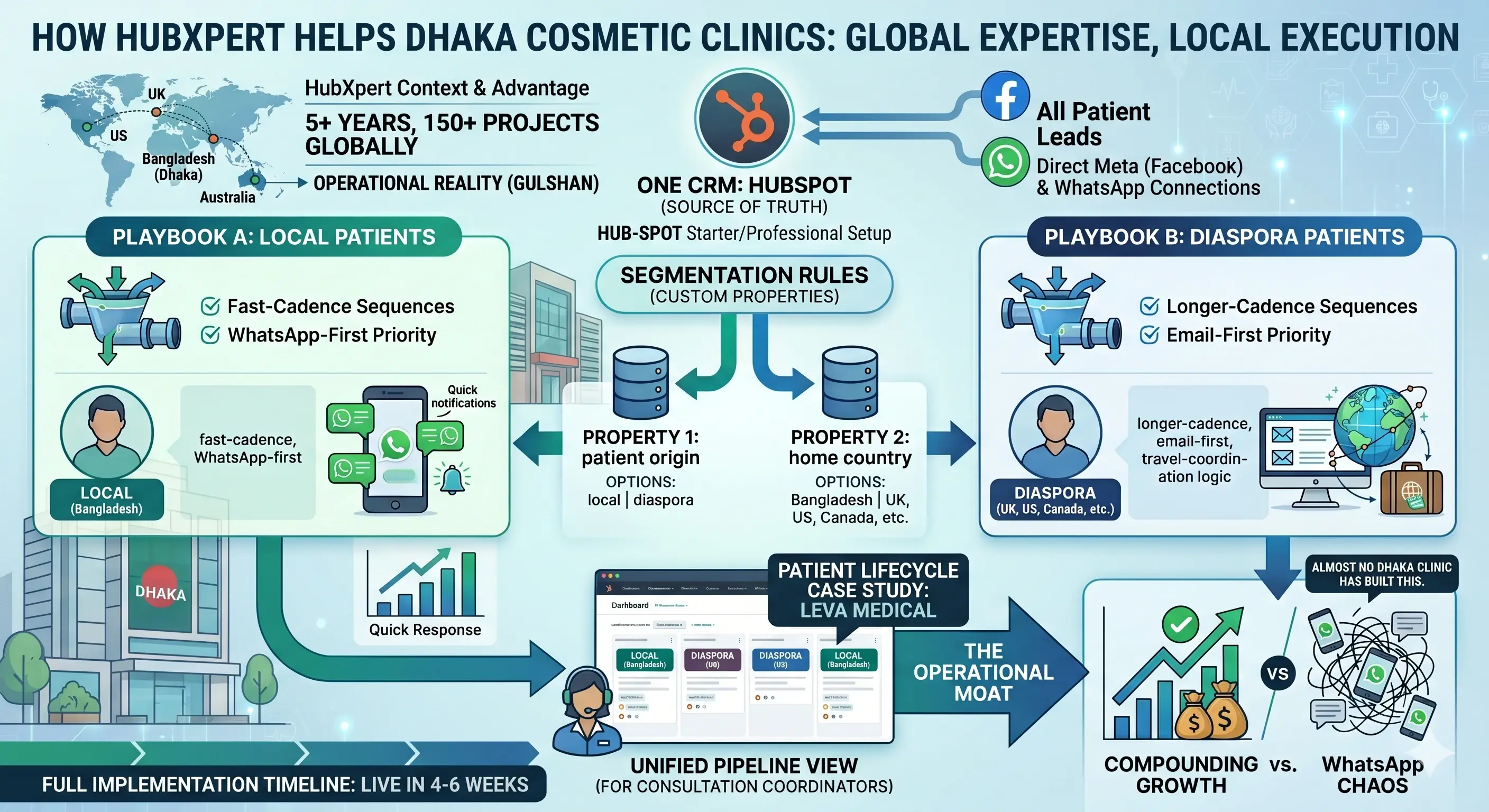
We've spent 5+ years and 150+ projects helping service businesses get real revenue out of HubSpot. For aesthetic clinics specifically, we know the operational rhythm: high-ticket consultations, long consideration windows, repeat injectable cycles, and patients who research for four to six weeks before walking in.
We build CAC-tracking dashboards for aesthetic clinics that show, in one screen, exact cost per patient by channel and by procedure type. Clinics typically reallocate 20–30% of their ad spend within the first 90 days based on what the dashboard surfaces.
We can plug into your existing stack through our HubSpot integration practice booking software, EHR, payment processor, so HubSpot becomes the single source of truth for your front desk, your marketers, and your surgeons, not another tool fighting for attention.
FAQs
How can cosmetic surgery clinics in Dhaka attract diaspora patients?
Clinics can attract diaspora patients through targeted digital marketing, virtual consultations, patient testimonials, educational content, and automated follow-up workflows that build trust over time.
Why do Bangladeshi patients travel abroad for cosmetic procedures?
Common reasons include perceived quality differences, specialist availability, convenience, and lack of awareness about local treatment options. Many patients simply need more information and confidence before choosing a clinic in Bangladesh.
Can HubSpot be used for cosmetic surgery marketing?
Yes. HubSpot helps clinics manage inquiries, automate follow-ups, schedule consultations, track marketing performance, and nurture prospective patients throughout the decision-making process.
What is the best CRM for cosmetic surgery clinics?
The best CRM depends on your goals, but HubSpot is widely used because it combines CRM, marketing automation, reporting, lead management, and communication tools in a single platform.
How do clinics manage international patient inquiries?
Many clinics use CRM systems such as HubSpot to centralize communication, track inquiry status, schedule consultations, and automate follow-up activities.
Can HubSpot automate consultation follow-ups?
Yes. HubSpot can automatically send confirmation emails, educational content, consultation reminders, and follow-up sequences based on patient actions and interests.
What content helps convert diaspora cosmetic surgery patients?
Before-and-after results, patient testimonials, surgeon credentials, clinic tour videos, procedure guides, and virtual consultation offers are often among the most effective content types.
How do clinics track leads from different countries?
HubSpot reporting tools allow clinics to track lead sources, website traffic, inquiry volume, consultation bookings, and conversions by country or region.
Can HubSpot support medical tourism marketing?
Yes. HubSpot can help healthcare providers manage international inquiries, automate communication, nurture leads, and track the patient journey from inquiry to treatment.
What is the biggest challenge when marketing to diaspora patients?
Building trust is often the biggest challenge. Most diaspora patients need multiple interactions and reassurance before booking a consultation or traveling for treatment.
Ready to Attract More Diaspora Patients?
HubXpert helps cosmetic surgery clinics build HubSpot-powered lead generation and patient nurturing systems designed to attract, engage, and convert diaspora patients.
Book a HubSpot Starter Strategy Session to learn how your clinic can create a scalable diaspora patient acquisition funnel and turn overseas inquiries into consultations.
Founder & CEO @ Hubxpert. My goal is to make every company using HubSpot succeed in their marketing organisation and automation.

Ratul Rahman
Table of Contents:

Subscribe to our newsletter

How to Migrate Sales Pipelines & Deal Stages to HubSpot
Here's how to migrate sales pipelines, deal stages, deal records & pipeline automation to HubSpot. Follow this step-by-step HubSpot pipeline migration guide to preserve data integrity and reporting accuracy.
How to Migrate Email Templates, Lists & History to HubSpot
To migrate email templates, contact lists, subscription preferences & email history to HubSpot: follow this technical HubSpot email migration guide to avoid data loss.
HubSpot Migration QA Checklist: Testing Your Data After Go-Live
Follow this HubSpot migration QA checklist to validate data, workflows, reports, integrations, and record associations after go-live. Learn post-migration testing best practices.
HubSpot Contact Deduplication: Before, During & After Migration
Wanna know how to perform CRM deduplication before, during and after a HubSpot migration? See duplicate management and data quality best practices.

How to Preserve CRM Data Integrity During a HubSpot Migration
Learn how to preserve CRM data integrity during a HubSpot migration: Data validation, record reconciliation & post-migration best practices.
Pre-Migration CRM Audit: What to Check Before Moving to HubSpot
Learn how to perform a CRM data audit before migrating to HubSpot: CRM data quality assessment, CRM readiness assessment and pre-migration best practices.
-
How to Migrate Sales Pipelines & Deal Stages to HubSpot
hello
-
How to Migrate Email Templates, Lists & History to HubSpot
hello
-
HubSpot Migration QA Checklist: Testing Your Data After Go-Live
hello
-
HubSpot Contact Deduplication: Before, During & After Migration
hello
-
How to Preserve CRM Data Integrity During a HubSpot Migration
hello
-
Pre-Migration CRM Audit: What to Check Before Moving to HubSpot
hello